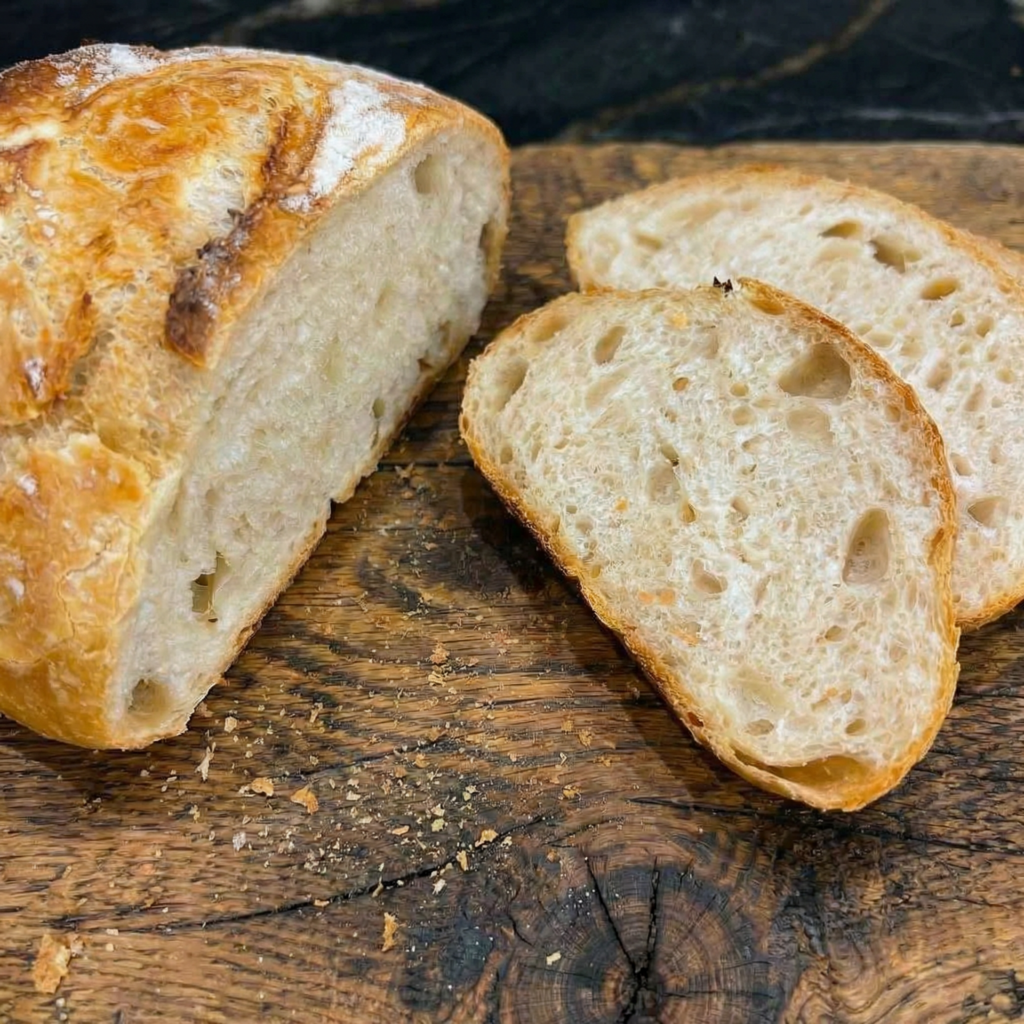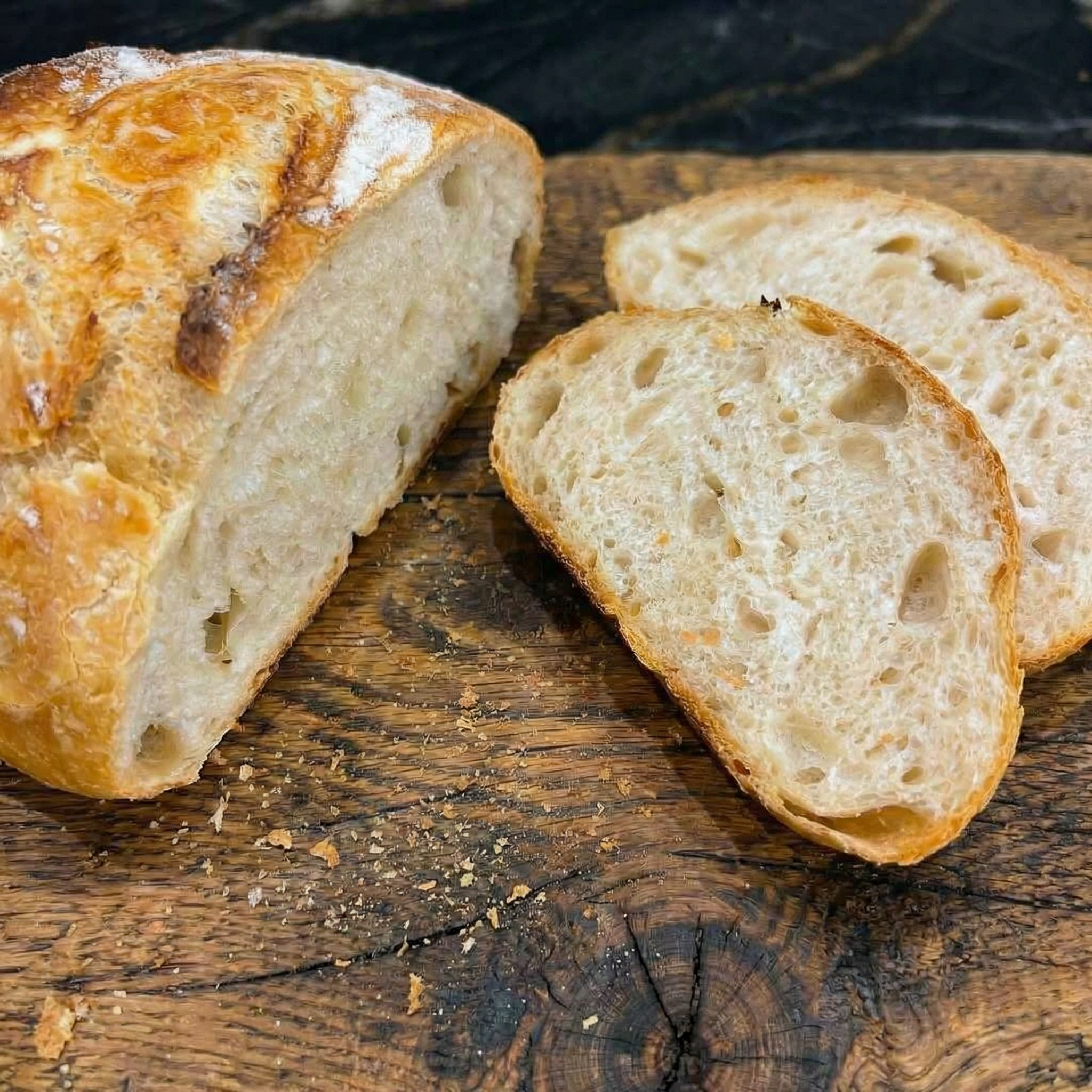
There’s something magical about pulling a gorgeous, golden, crusty loaf of bread out of your own oven. The crackle of the crust as it cools, the aroma filling your kitchen, the way it makes you feel like you’ve just done something extraordinary—because you have.
This artisan bread is everything you want: a shatteringly crisp crust, a chewy, hole-filled interior, and that deep, complex, bakery-style flavor that seems impossible to achieve at home.
But here’s the secret: it’s not impossible. It’s actually incredibly simple. With just four ingredients, a little patience, and a Dutch oven, you can create bread that rivals any bakery. Let’s bake something beautiful.
The Secret to Bakery-Style Crust and Crumb
The magic of artisan bread lies in three things: high hydration, long fermentation, and steam. A wetter dough (about 75-80% hydration) creates those iconic holes and a chewy, open crumb. A long, slow rise develops deep, complex flavor that you just can’t rush.
And steam is the secret to that crackly, golden crust—it keeps the exterior soft long enough for the bread to expand fully, then evaporates to leave behind that shatteringly crisp shell. A Dutch oven is your secret weapon here: it traps steam perfectly, creating a mini bread oven right in your kitchen. The result? Bread that looks and tastes like it came from a fancy bakery. Spoiler: you made it.
Instructions
Mix the Dough
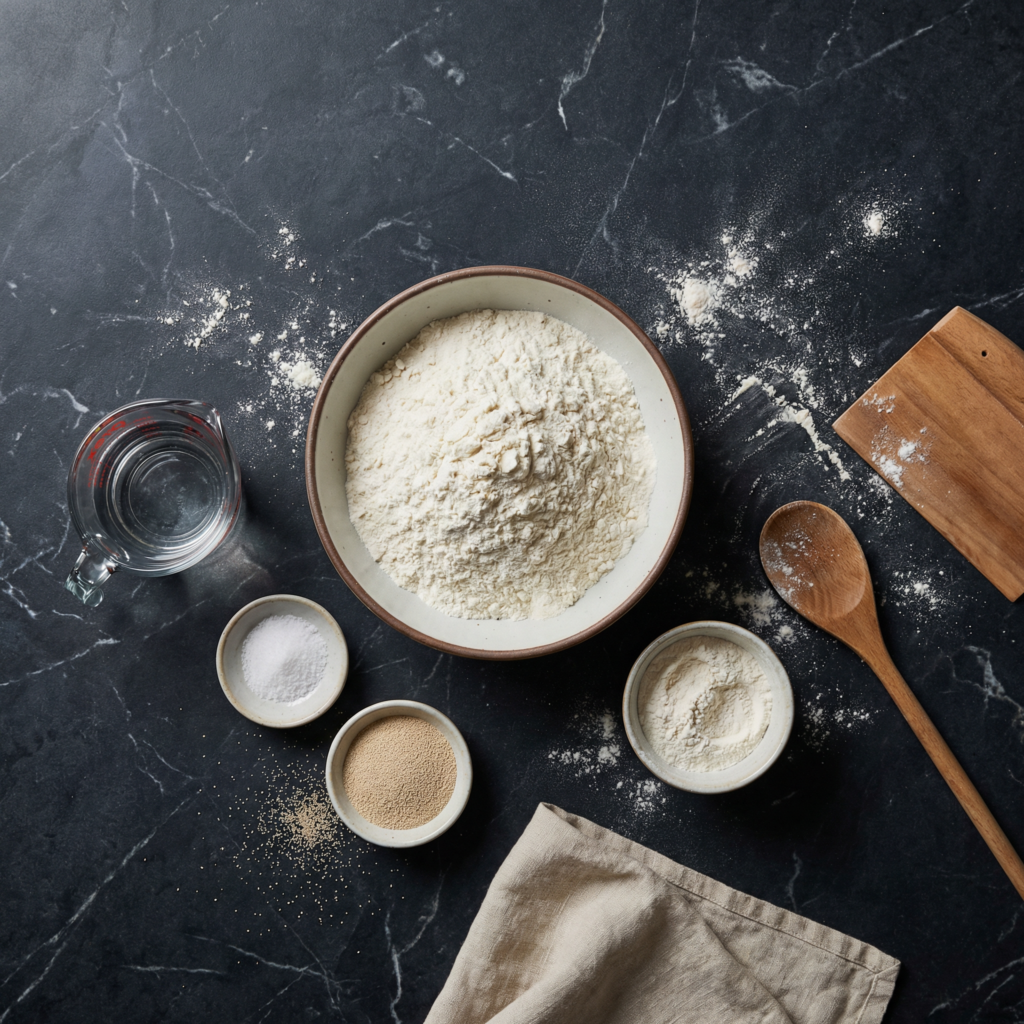
In a large bowl, combine the flour, salt, and instant yeast. Whisk to combine. Add the warm water and stir with a wooden spoon or your hand until a shaggy, sticky dough forms and no dry flour remains. The dough will be very wet and sticky—that’s exactly right .
Cover and Rest
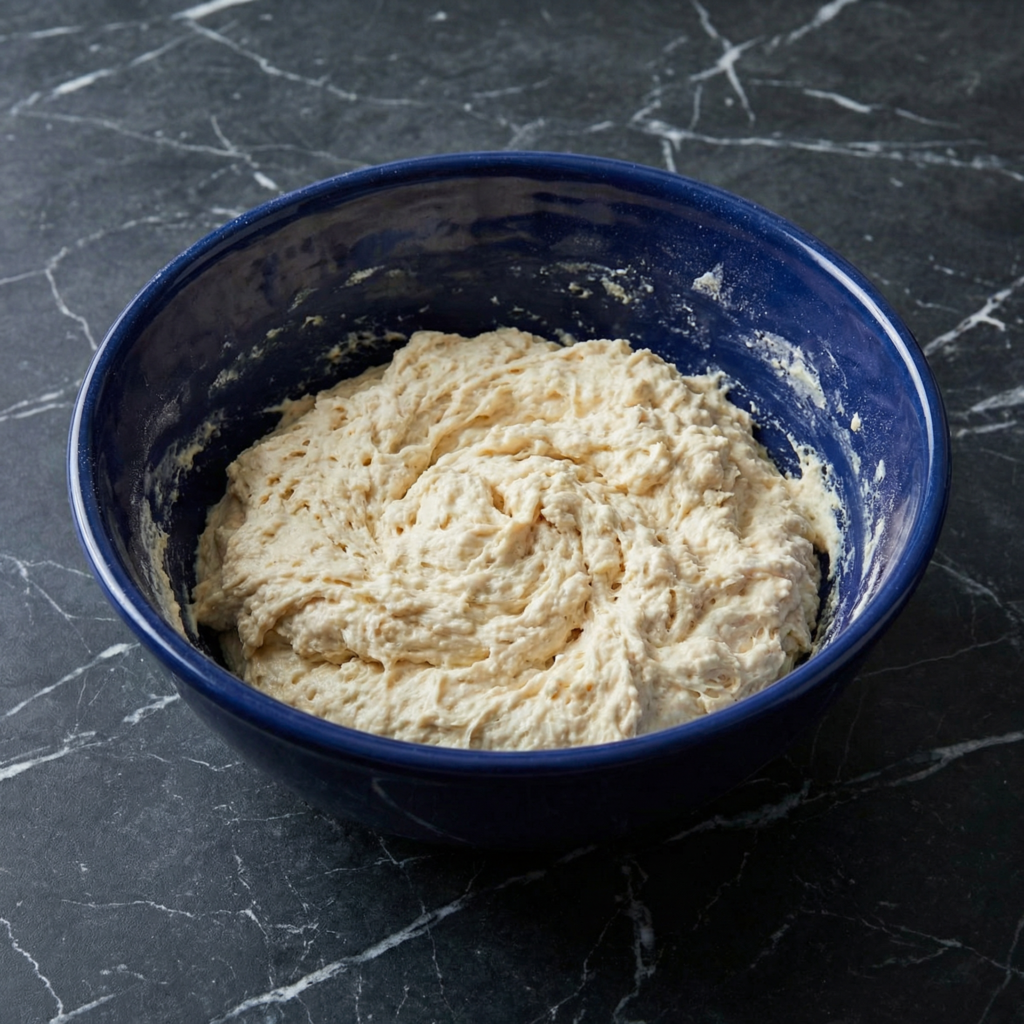
Cover the bowl with plastic wrap or a damp kitchen towel. Let it rest at room temperature for 12-18 hours (overnight is perfect). The dough should double in size, be bubbly on top, and smell slightly yeasty .
Turn Out and Fold
Lightly flour a work surface. Turn the dough out onto the floured surface. It will be very wet and sticky. Using floured hands, gently stretch and fold the dough over itself a few times—like folding a letter. This adds structure without kneading .
Shape the Dough
Gently shape the dough into a round by tucking the edges underneath, creating surface tension. Don’t overwork it—a few gentle movements are enough .
Second Rise
Place the shaped dough seam-side down on a piece of parchment paper. Dust the top with flour and cover loosely with plastic wrap or a towel. Let it rise for 1-2 hours until puffy and nearly doubled. It should hold an indent when gently poked .
Preheat Dutch Oven
About 30 minutes before the second rise is complete, place a Dutch oven with its lid in the oven and preheat to 450°F (230°C). Getting the pot screaming hot is essential .
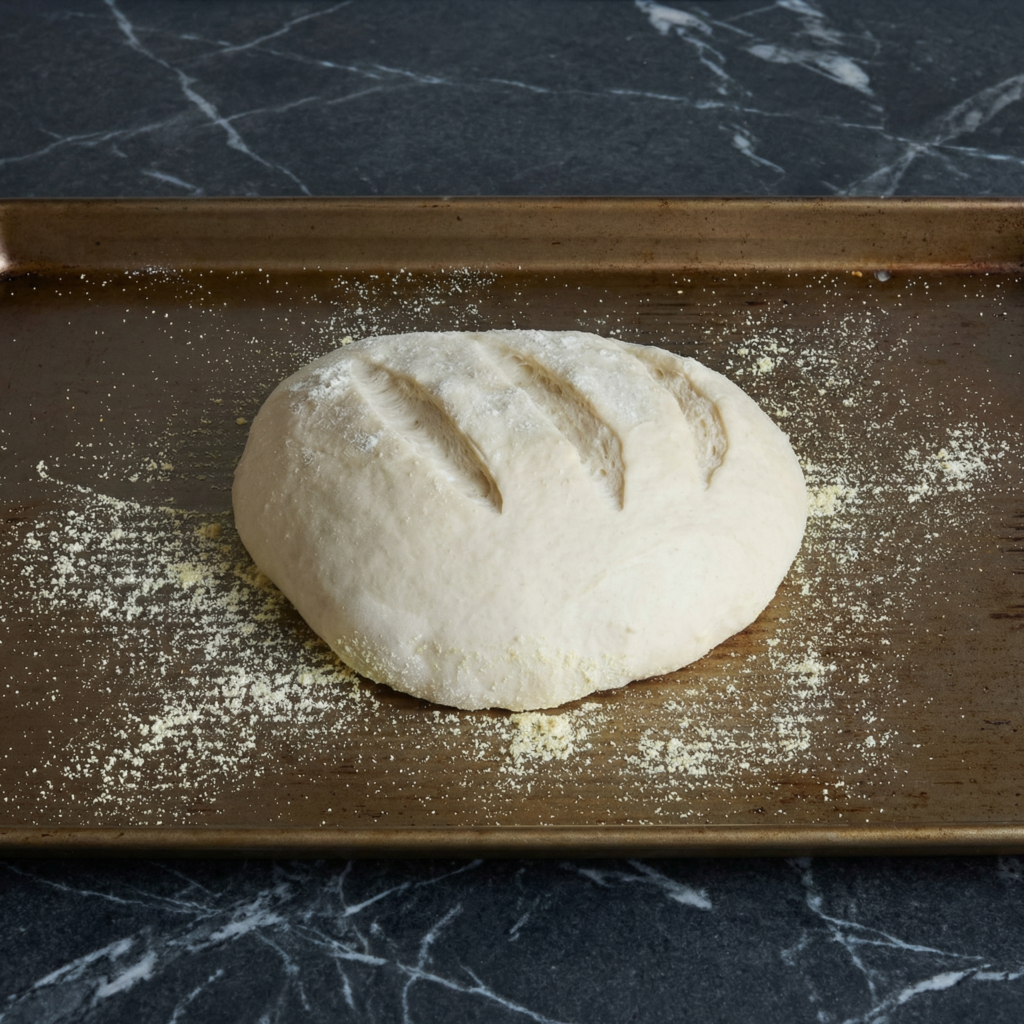
Score the Dough
Carefully remove the hot Dutch oven from the oven. Using the parchment paper as a sling, lift the dough and lower it into the pot. Using a lame or sharp knife, score the top with a quick, confident slash about ¼-inch deep. This allows the bread to expand .
Bake Covered
Put the lid on and bake for 30 minutes. The lid traps steam, creating that perfect crust .
Bake Uncovered
Remove the lid and bake for another 10-15 minutes until the crust is deeply golden brown and beautiful. The bread should sound hollow when tapped on the bottom .
Cool Completely
Transfer the bread to a wire rack and let it cool completely—at least 1-2 hours. This is the hardest part, but essential for the perfect texture .
Slice and Enjoy
Slice into that gorgeous loaf, slather with butter, and marvel at what you’ve created .
Store
Store leftover bread in a paper bag at room temperature for 2-3 days, or freeze for up to 3 months .
Pro-Tips for Artisan Bread Greatness
- Use a Kitchen Scale: Baking by weight is far more accurate than cups. A scale is your best friend for consistent results .
- Don’t Rush the First Rise: A full 12-18 hours develops deep flavor and that beautiful open crumb. Overnight is perfect .
- Hot Dutch Oven is Essential: A screaming-hot pot creates steam and gives you that gorgeous, crackly crust. Don’t skip preheating it .
- Be Gentle When Shaping: Wet dough is delicate. Overworking it will deflate all those lovely air bubbles you worked so hard to create .
- Cool Completely: Slicing warm bread is tempting, but it will be gummy inside. Patience is rewarded with the perfect crumb .