Master the art of traditional bread baking with these authentic Artisan French Baguettes. This recipe guides you through the precise techniques—from developing gluten through folds to creating steam in your home oven—required to achieve the iconic crisp, deeply golden crust and the soft, hole-filled crumb of a true Parisian bakery baguette.
With patience and attention to detail, you’ll transform flour, water, yeast, and salt into a loaf that crackles when squeezed and smells like a professional boulangerie.
The Science of Crust and Crumb
The perfection of a baguette lies in the meticulous management of fermentation and oven environment. The extended, cool fermentation (often 18-24 hours) allows wild yeast and bacteria to develop complex flavors and acids that strengthen the gluten network.
This creates the structure needed to trap gas and form the irregular, open crumb. The iconic crust is a product of two factors: surface gelatinization and steam. Scoring the dough just before baking controls where it expands, preventing random tearing. Introducing steam in the oven’s first minutes keeps the dough surface moist and elastic, allowing for maximum “oven spring” (rapid expansion) before the crust sets.
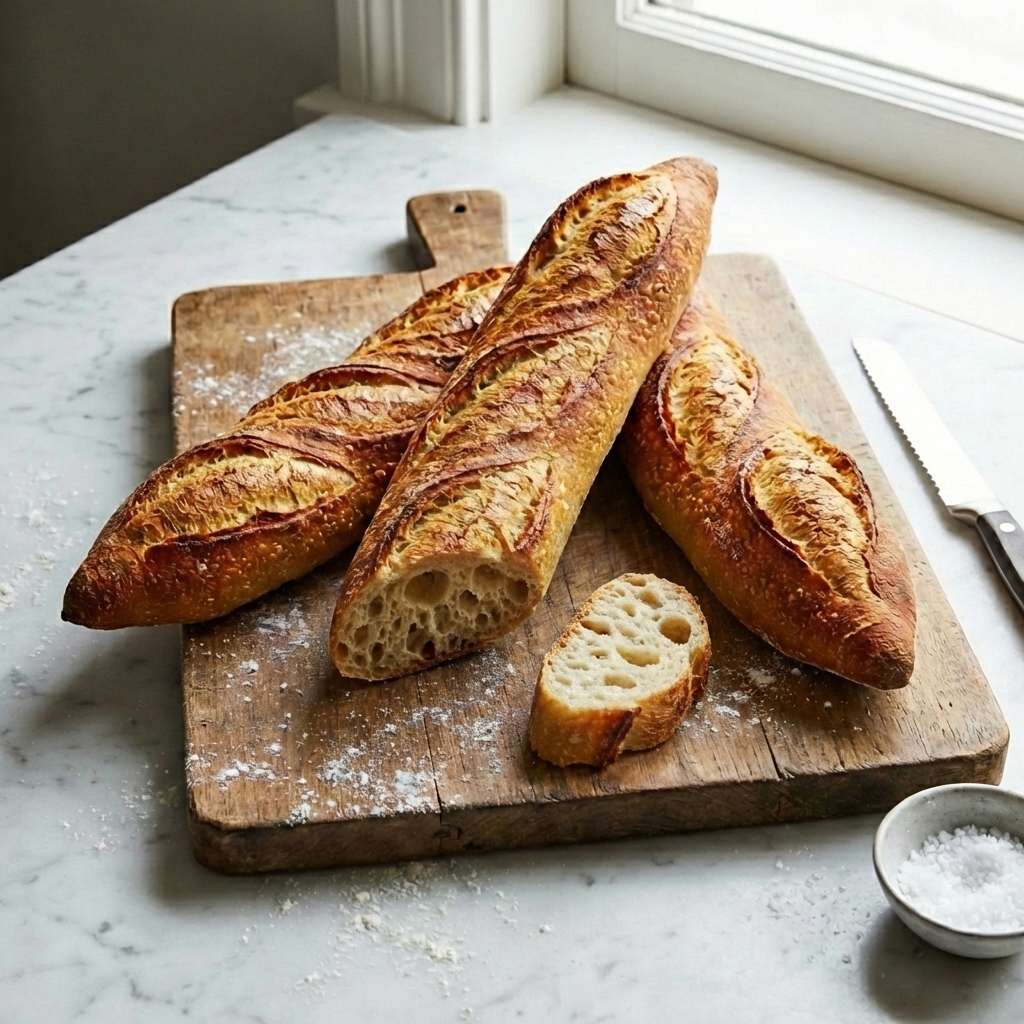
As the steam evaporates, the starches on the surface gelatinize and then dry into a crisp, glassy, blistered shell—the hallmark of a perfectly baked baguette.
Ingredients
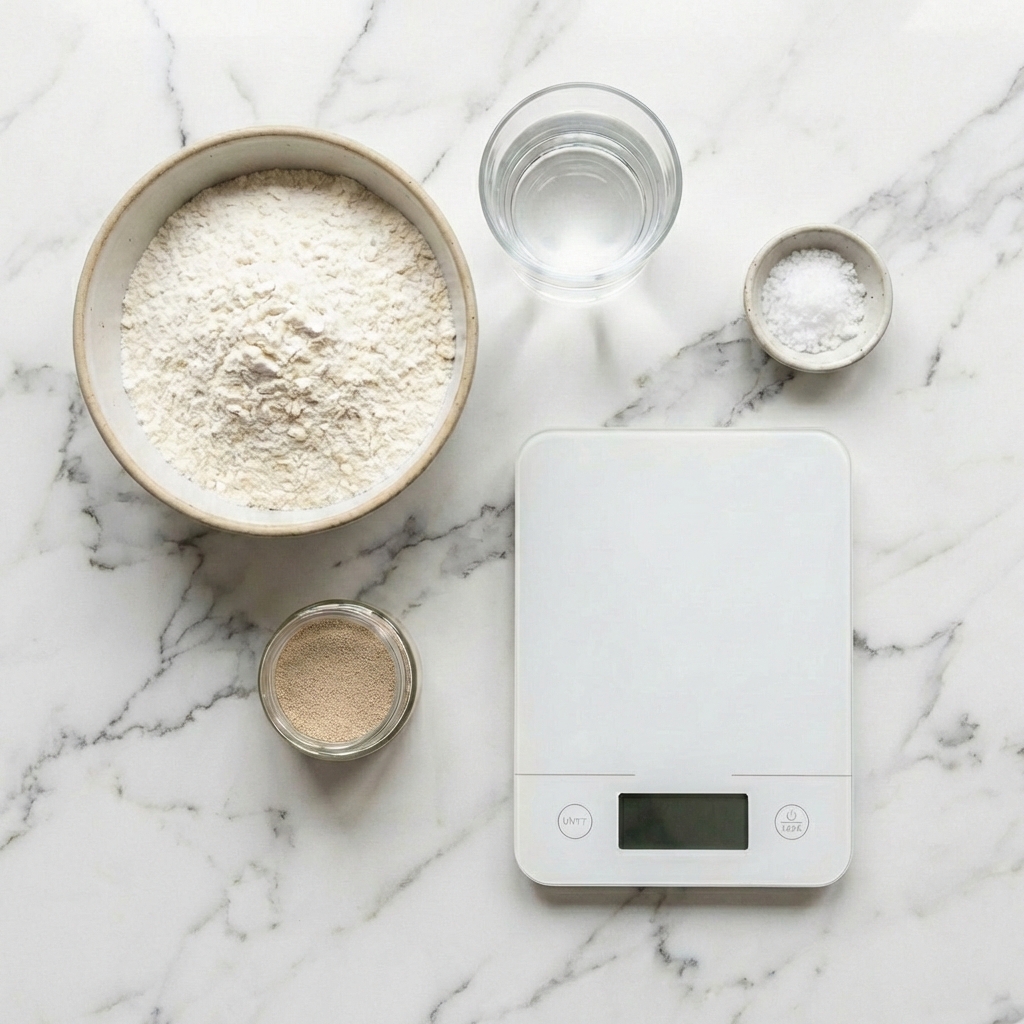
Instructions
Autolyse & Initial Mix
In a large bowl, combine the bread flour and water. Mix with a spatula or your hands until no dry flour remains. Cover and let rest (autolyse) for 30 minutes. This allows the flour to fully hydrate and gluten strands to begin forming naturally.
Incorporate Yeast & Salt
Sprinkle the yeast and salt evenly over the dough. Use wet hands to pinch and fold the dough for 2-3 minutes until the yeast and salt are fully incorporated and the dough becomes smoother.
Bulk Fermentation with Folds
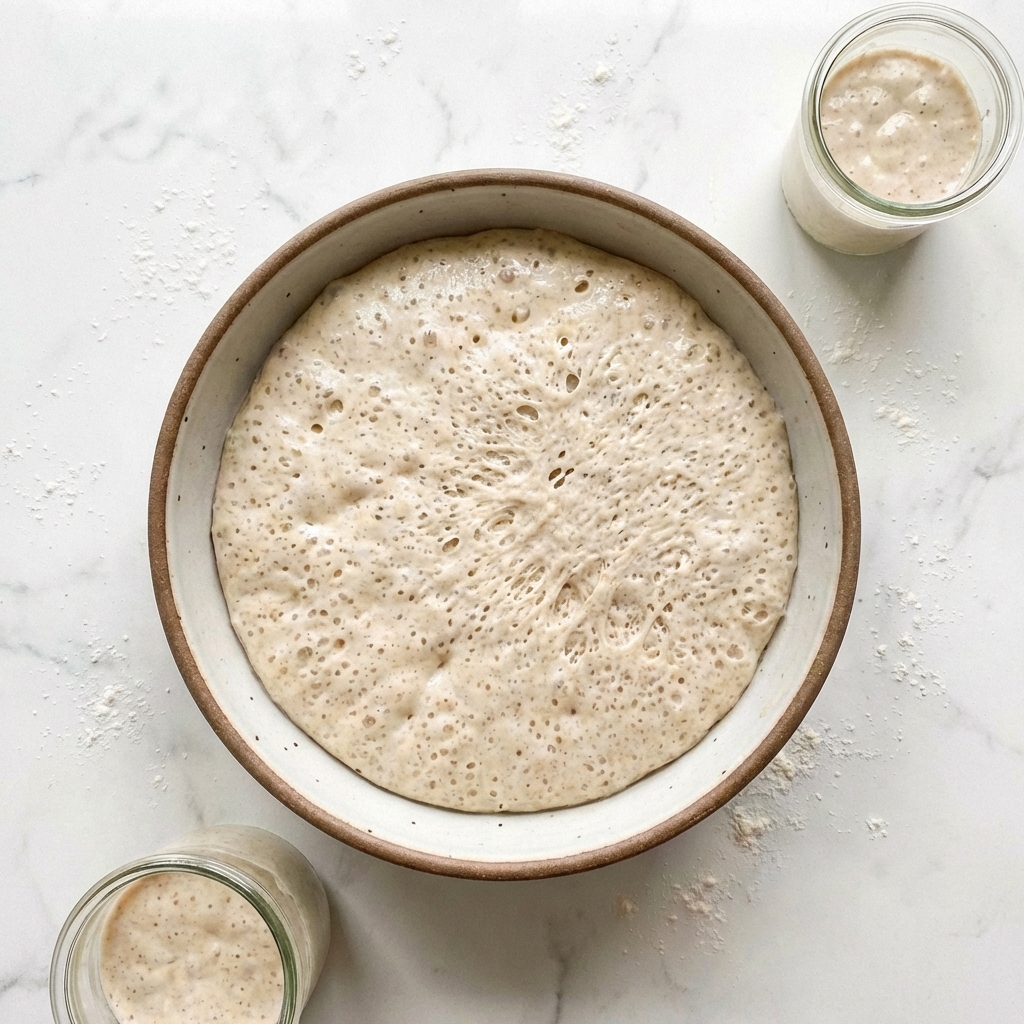
Cover the bowl and let the dough rise at cool room temperature (68-72°F/20-22°C) for 12-14 hours, or until nearly doubled and bubbly. During the first 2 hours, perform a series of 4 “stretch and folds,” one every 30 minutes.
To do this, wet your hand, grab one side of the dough, stretch it up, and fold it over the center. Repeat on all four sides. This builds strength without kneading.
Divide, Pre-shape, & Rest
Gently turn the dough out onto a lightly floured surface. Divide into 3 equal pieces (~290g each). Handle gently to preserve gas bubbles. Pre-shape each piece into a loose rectangle, then cover with a damp cloth and let rest for 30 minutes (bench rest).
Shape the Baguettes
Working with one piece at a time, gently flatten into a rectangle. Fold the top third down to the center and seal with the heel of your hand. Fold the bottom third up to the center and seal.
Then, starting from the top, roll the dough into a tight cylinder, sealing the seam with your palm. Roll gently to elongate to about 14-16 inches. Place seam-side up into a well-floured couche (linen cloth) or a baguette pan, creating ridges between loaves to support their shape.
Final Proof
Cover the shaped baguettes and let proof at room temperature for 60-90 minutes, until puffy and increased in size by about 50%. The dough should spring back slowly when gently pressed.
Score & Bake with Steam
Preheat your oven with a baking stone or steel to 475°F (245°C) for at least 45 minutes. Place a metal pan on the bottom rack. Carefully transfer the proofed baguettes onto a piece of parchment on a peel or inverted baking sheet.
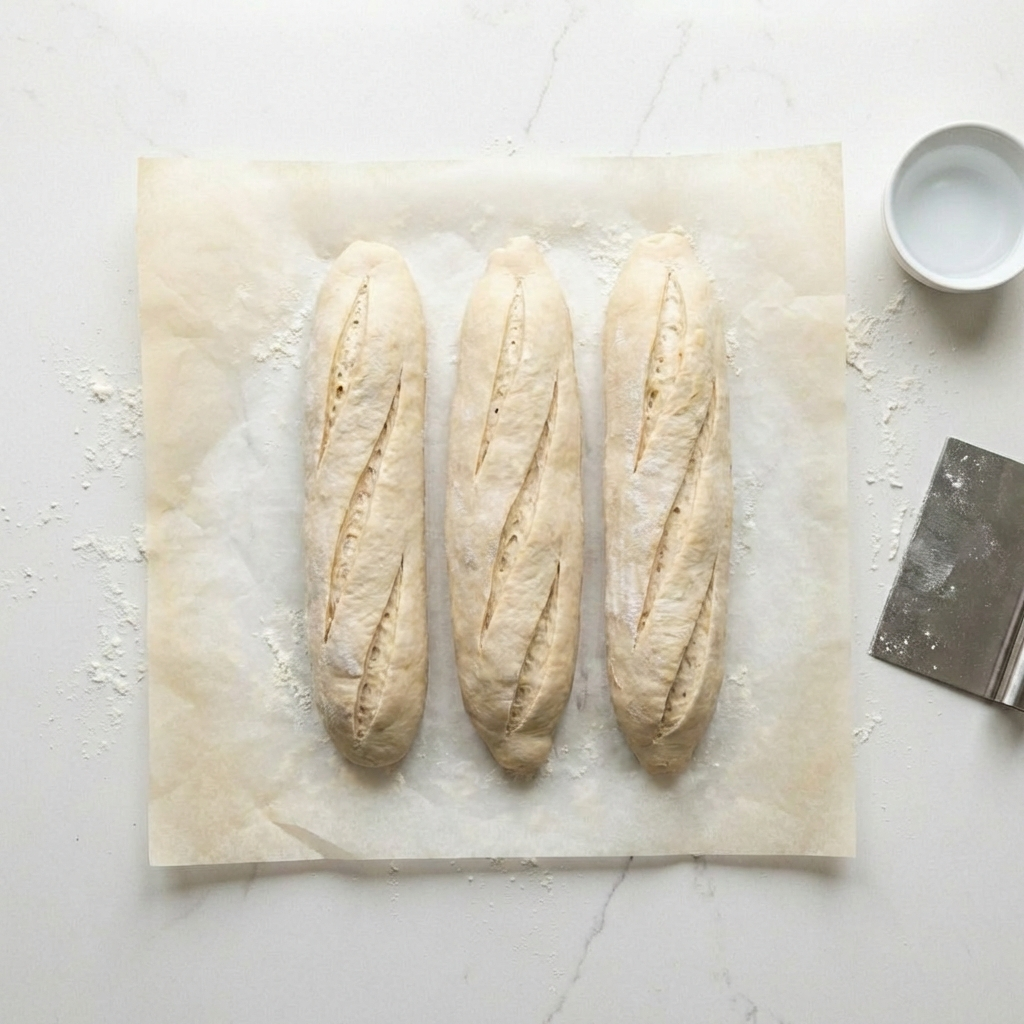
Using a razor blade (lame) held at a 30-degree angle, make 4-5 swift, confident diagonal slashes along each loaf. Slide the parchment with the baguettes onto the hot stone. Immediately throw a handful of ice cubes into the preheated pan below to create steam.
Bake for 20-25 minutes until deeply golden brown and crisp. For extra crispness, turn off the oven and leave the door ajar for 5 minutes at the end.
Cool Completely
Transfer the baked baguettes to a wire rack. Let cool completely for at least 1 hour before slicing. The interior is still setting; cutting too soon releases steam and makes the crumb gummy.
Pro-Tips for Bakery-Quality Baguettes
- Use a Scale: Precision with hydration (72%) is critical for texture. Volume measurements are unreliable.
- Bread Flour is Essential: Its high protein content develops the strong gluten network needed for an open crumb.
- Handle Gently: Preserve those precious gas bubbles during shaping to achieve the irregular holes.
- Create a Steamy Oven: Steam is non-negotiable for crust development. Ice cubes, a spray bottle, or pouring boiling water into the preheated pan all work.
- Sharp Scoring Tool: A razor blade (lame) cuts cleanly without dragging the dough. Dull knives tear the surface.
- Listen for the Crackle: A perfectly baked baguette will audibly crackle as it cools—this is the crust contracting and is a sign of success.
- Storage: Baguettes are best the day they are baked. To recrisp, spritz with water and bake at 400°F (200°C) for 5-8 minutes.
This Artisan French Baguette recipe rewards patience with extraordinary results.