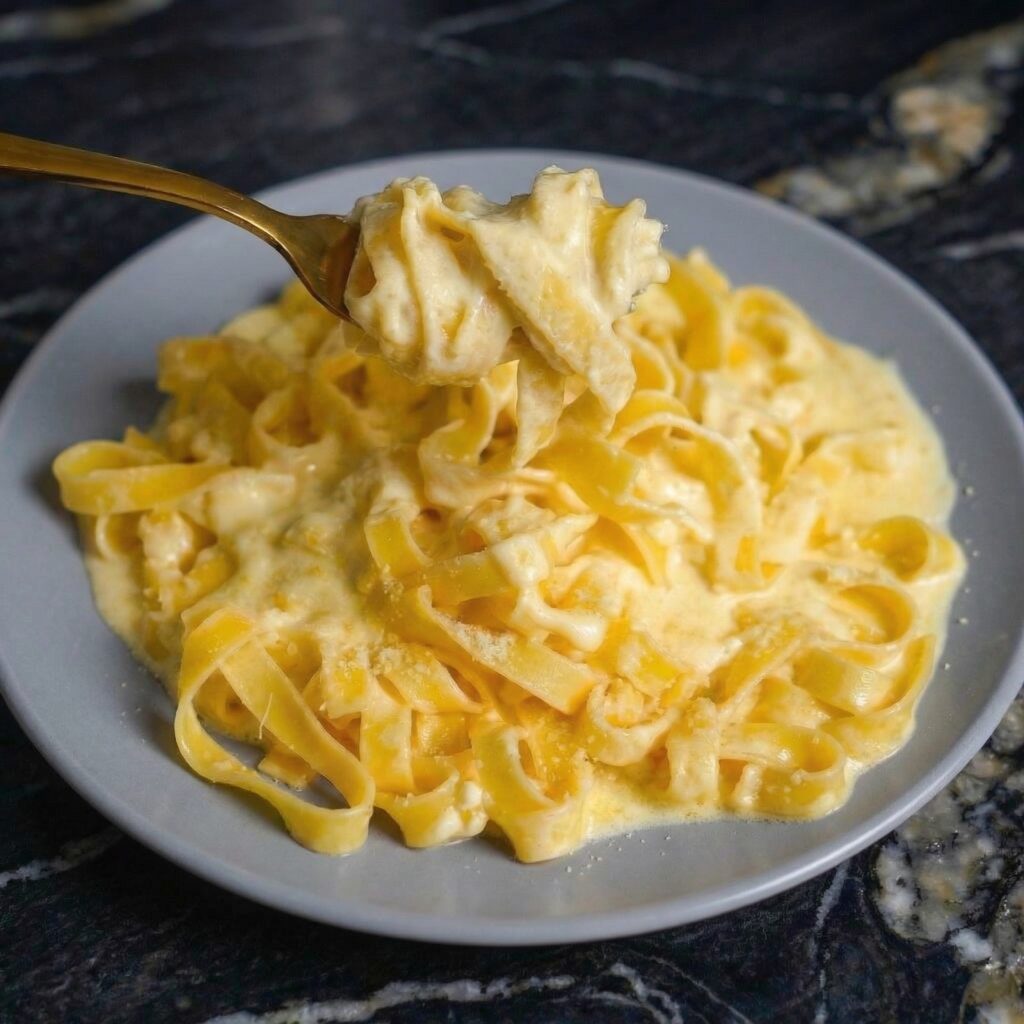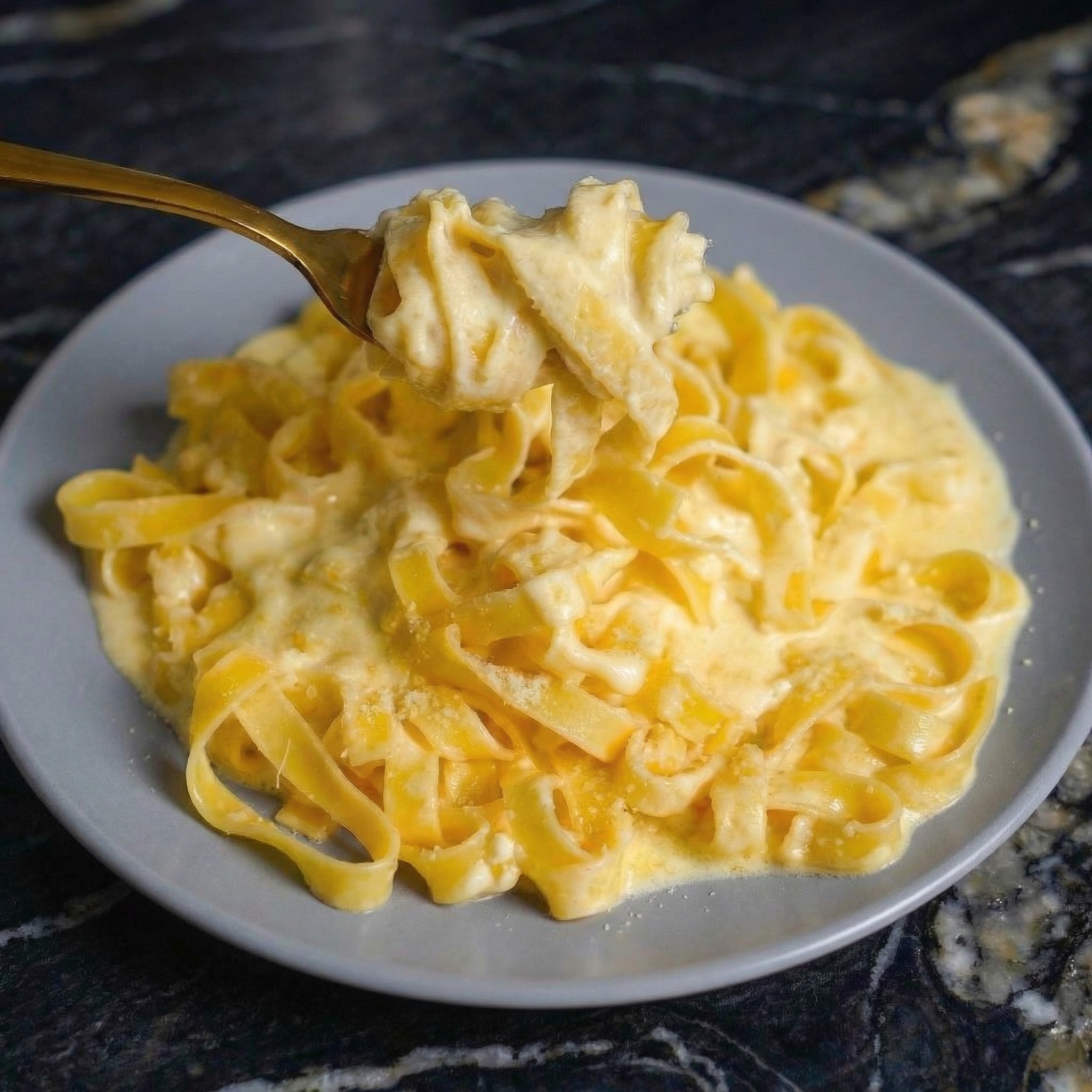
There’s Italian food, and then there’s Italian food as Americans know it—and few dishes illustrate the difference better than Fettuccine Alfredo.
The authentic Roman version? It’s something else entirely. Just butter, Parmigiano-Reggiano, and a little pasta water, emulsified into a silky, luxurious sauce that coats every strand of pasta. It’s simple, elegant, and absolutely transcendent.
This is the real Alfredo, created by Alfredo di Lelio in Rome in the early 20th century, and it will change the way you think about this classic dish forever.
Bring a Large Pot of Water to a Boil
Fill a large pot with water and bring to a rolling boil. Add a generous amount of salt—the water should taste like the sea. This is the only chance to season the pasta itself.
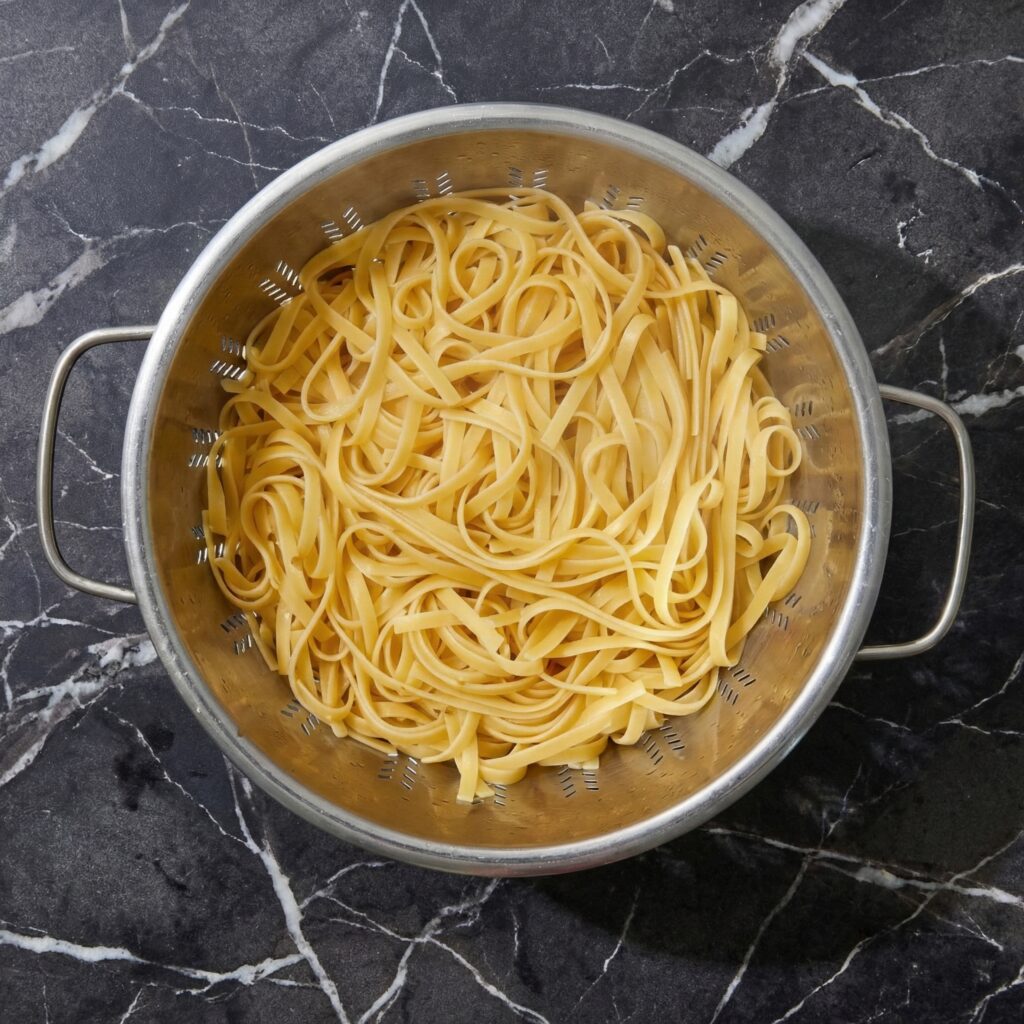
Cook the Pasta
Add the fettuccine to the boiling water and cook according to package directions until al dente. Fresh fettuccine will cook in 2-3 minutes; dried will take 8-10 minutes. Reserve at least 1 cup of pasta cooking water before draining.
Start the Sauce
While the pasta cooks, place the cold butter cubes in a large serving bowl or the pot you’ll use for tossing. The bowl should be large enough to hold all the pasta comfortably.
Drain the Pasta
When the pasta is al dente, drain it well (reserving the water) and transfer it immediately to the bowl with the cold butter. The heat from the pasta will begin melting the butter.
Toss and Emulsify
Toss the hot pasta with the butter vigorously, using tongs or a large fork and spoon. Add about ½ cup of the hot pasta water and continue tossing. The butter will melt and begin to emulsify with the water.
Add the Cheese
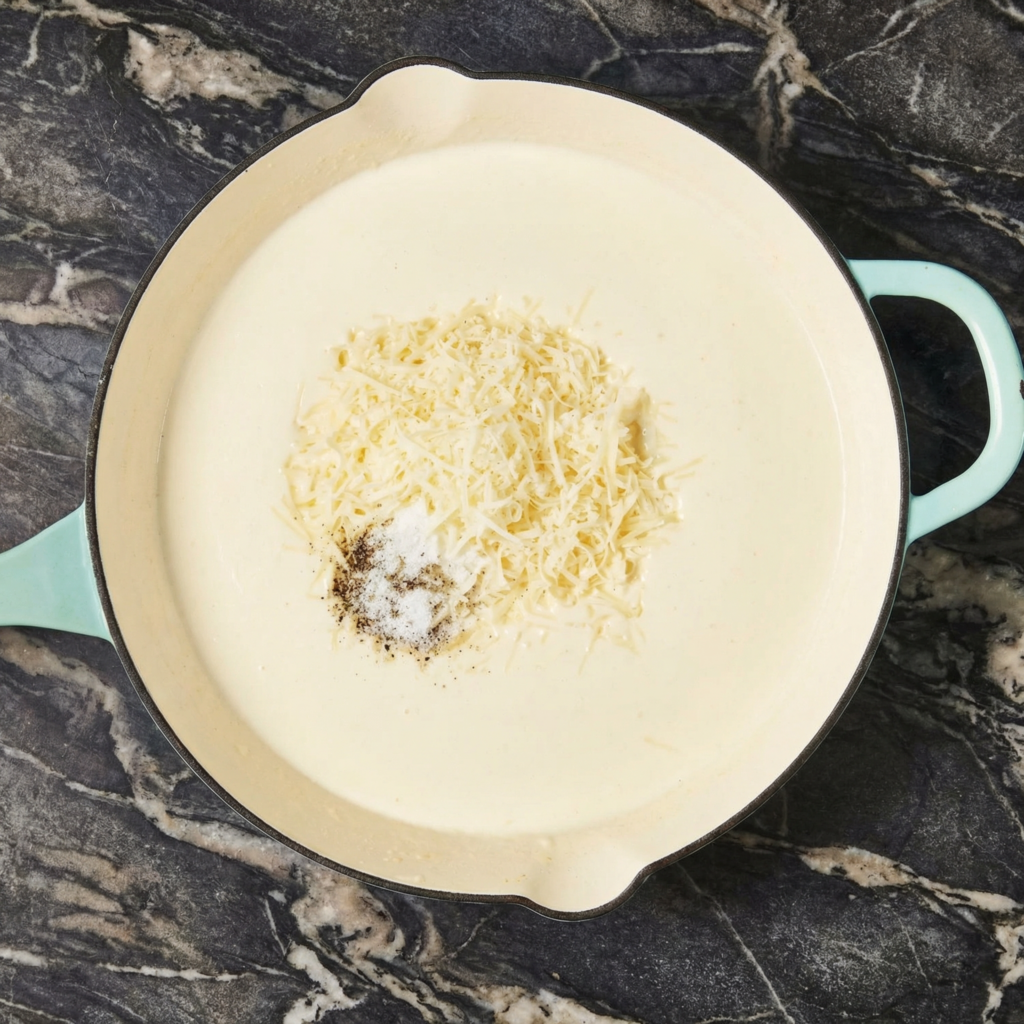
Gradually add the grated Parmigiano-Reggiano, a handful at a time, tossing constantly. Add more pasta water as needed, about ¼ cup at a time, until the sauce comes together into a creamy, silky emulsion that coats every strand of pasta. The sauce should be smooth and glossy, not clumpy or greasy.
Season
Add freshly ground black pepper to taste. Taste and adjust seasoning—the cheese is salty, so additional salt may not be needed.
Serve Immediately
Transfer the pasta to warmed bowls or plates. Top with additional grated Parmigiano-Reggiano and a sprinkle of fresh parsley if desired. Serve at once—this dish waits for no one.
Pro-Tips for Alfredo Perfection
- Use the Best Ingredients: With only three ingredients, quality matters enormously. Use European-style butter (higher fat content) and authentic Parmigiano-Reggiano.
- Grate Your Own Cheese: Pre-grated cheese contains anti-caking agents that prevent smooth melting. Grate it fresh from a block.
- Reserve Plenty of Pasta Water: The starchy water is essential for creating the emulsion. Save more than you think you’ll need.
- Work Quickly: The sauce comes together fast. Have everything ready before the pasta is done.
- Cold Butter, Hot Pasta: Starting with cold butter and letting the hot pasta melt it gradually helps create the emulsion.
- Toss Vigorously: Don’t be gentle—vigorous tossing is what creates the creamy sauce.
- Serve Immediately: Alfredo doesn’t wait. Have your table set and guests ready before you start the final step.
- Fresh vs. Dried Pasta: Fresh fettuccine is traditional and absorbs the sauce beautifully, but high-quality dried pasta works well too.
This Authentic Fettuccine Alfredo is simple, elegant, and absolutely perfect.