Hailing from San Sebastián, the Basque Burnt Cheesecake is a revelation in simplicity and flavor. This crustless wonder forgoes the fuss of a water bath or perfect smoothing, instead celebrating high heat and dramatic contrast.
The result is a cheesecake with a bold, bittersweet caramelized “burnt” top and a rich, velvety, almost soufflé-like interior that remains luxuriously jiggly in the center.
Baked in a parchment-lined pan that creates beautiful rustic folds, it requires just a handful of ingredients and one bowl. It’s a sophisticated dessert that’s unexpectedly easy to master, perfect for impressing guests with its stunning, wabi-sabi beauty.
The Science of the “Burnt” Top & Custardy Center
The magic of this cheesecake lies in its high-temperature bake. While a New York cheesecake is baked low and slow to prevent cracking, the Basque version is blasted at 400-450°F (200-230°C). This intense heat rapidly caramelizes the sugars on the surface, creating the signature dark, complex top while the inside remains undercooked and custardy.
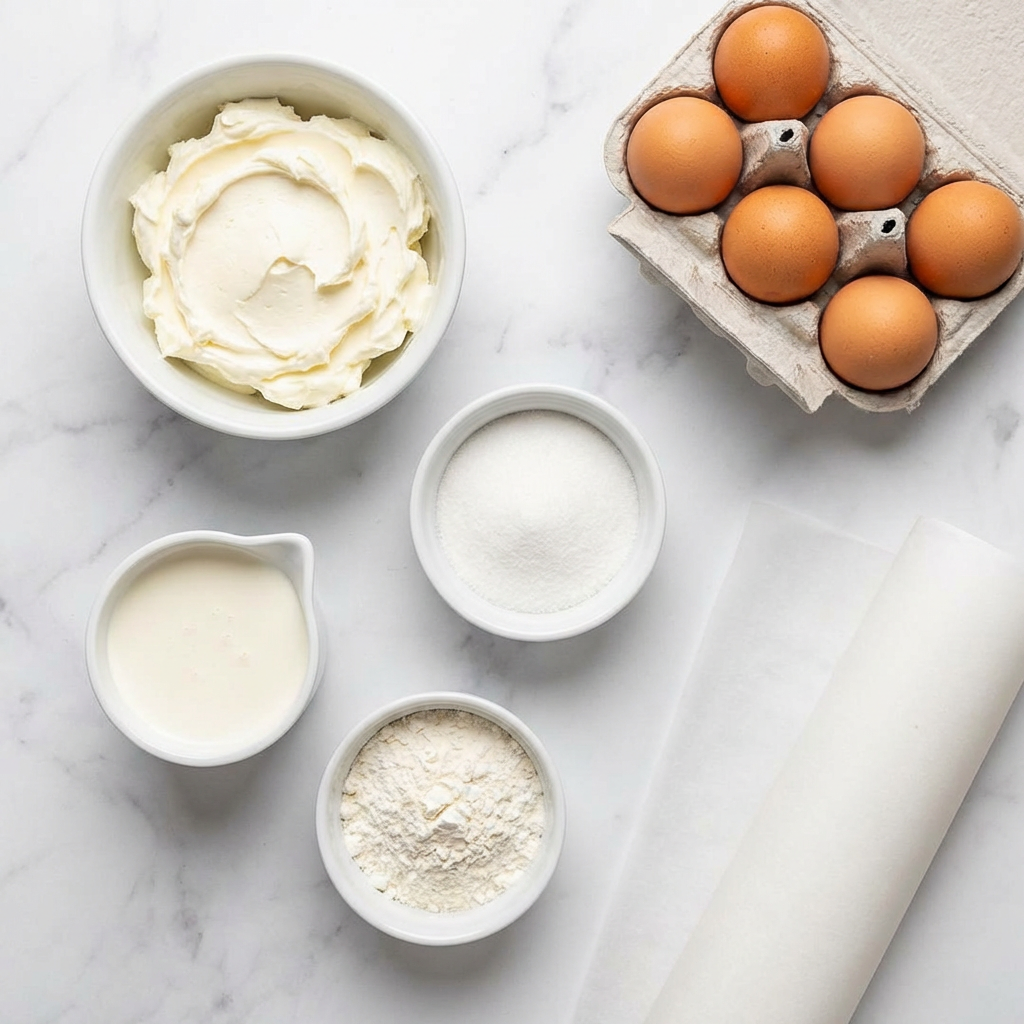
The lack of a crust and simple ingredient list—cream cheese, sugar, eggs, heavy cream, and a bit of flour—creates a batter with a high moisture content. The small amount of flour provides just enough structure to set the edges while allowing the center to stay gloriously loose.
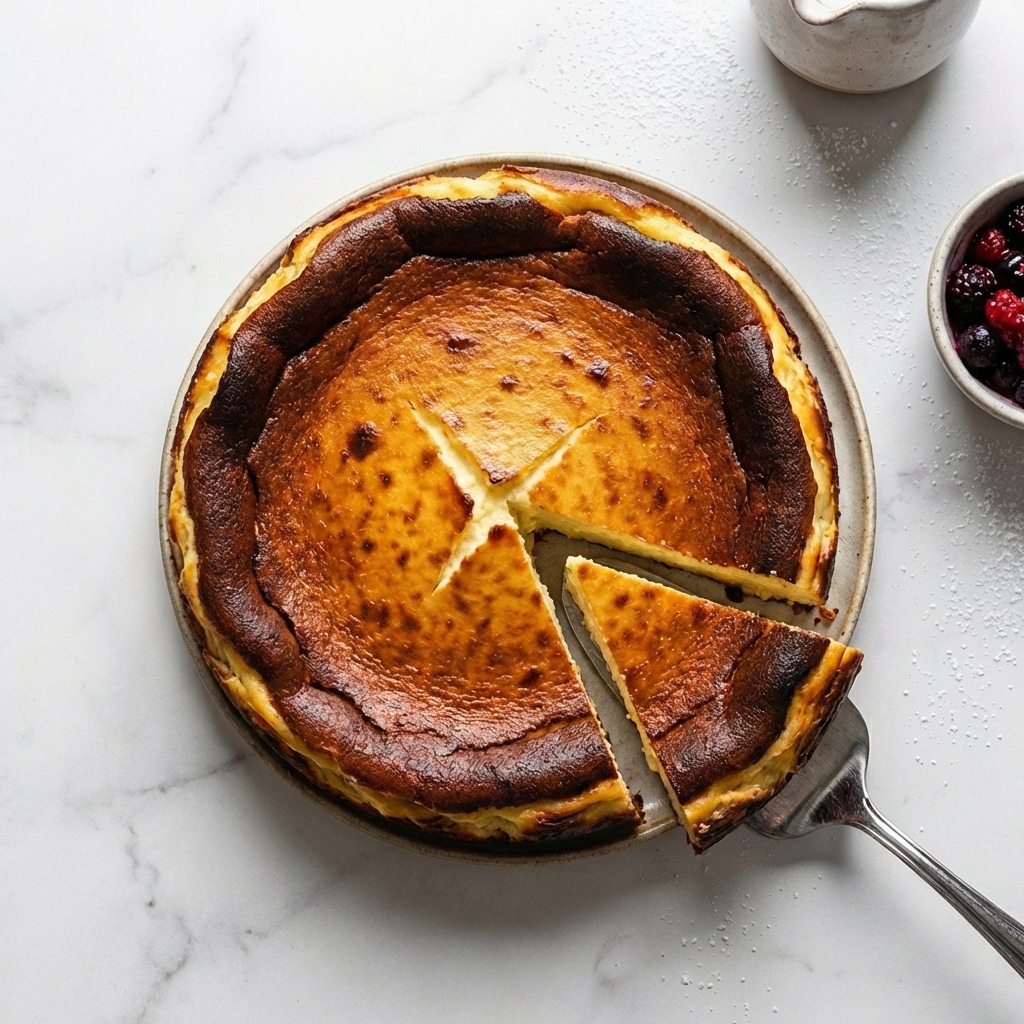
As it cools, the center falls slightly, creating the classic sunken appearance. The “burnt” top is not a mistake but a deliberate layer of deep, bittersweet flavor that perfectly balances the sweet, creamy interior.
Instructions
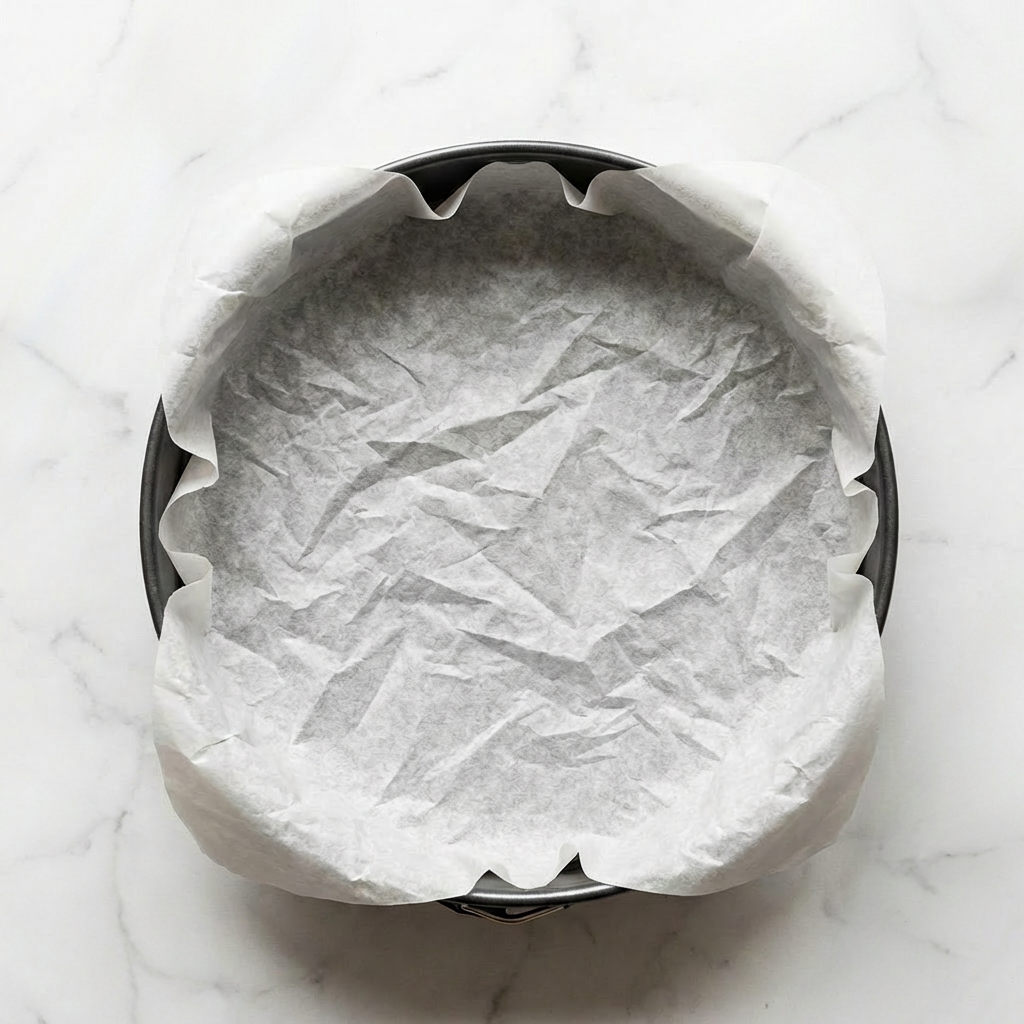
The Prepared Parchment-Lined Pan (Result of Pan Prep)
Preheat oven to 400°F (200°C). Take a large sheet of parchment paper and crumple it into a ball, then uncrumple it. This makes it more pliable.
Line a 9-inch springform pan with the parchment, pressing it into the bottom and up the sides. It will have rustic, dramatic folds—this is part of the charm. Trim any excess paper hanging more than 2 inches above the rim.
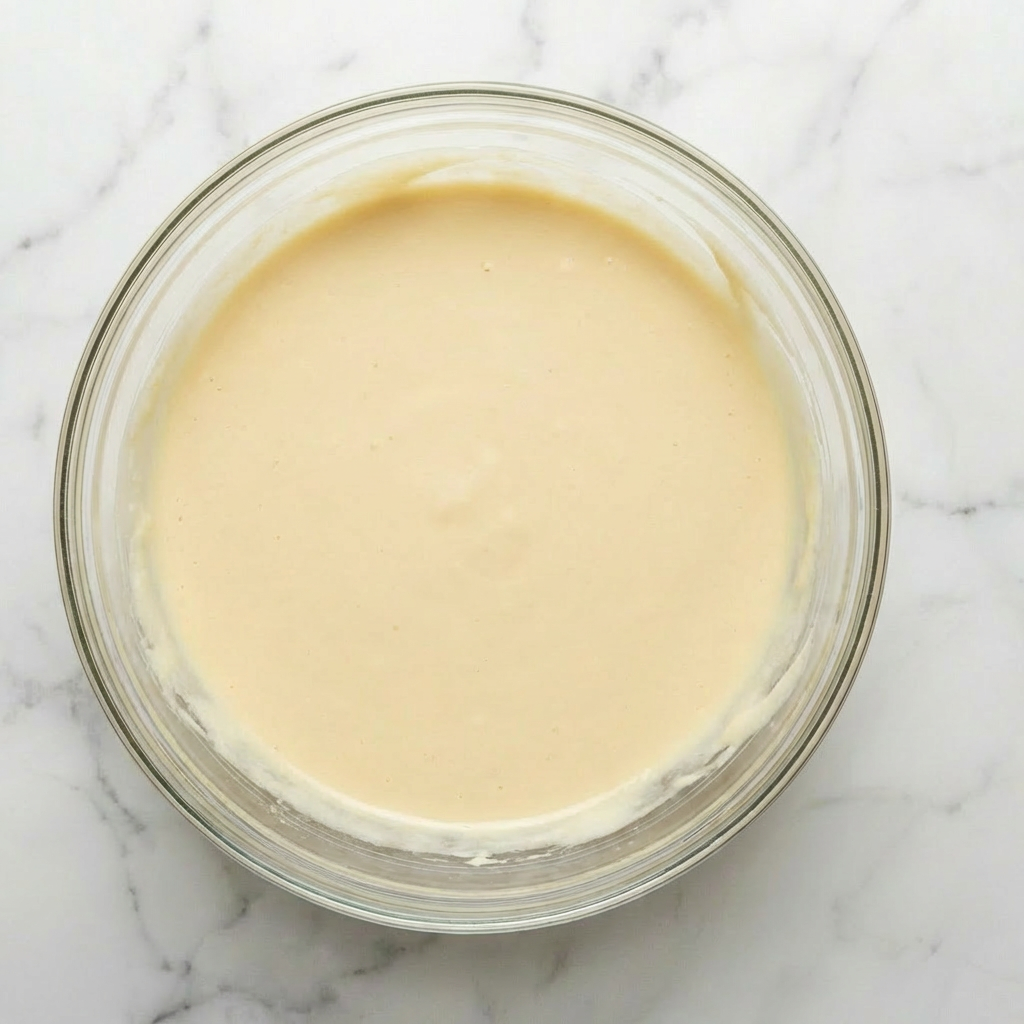
The Smooth, Liquid Cheesecake Batter (Result of Mixing)
In a large bowl using a hand mixer or stand mixer with the paddle attachment, beat the softened cream cheese on medium speed until completely smooth and creamy, about 2 minutes. Add the sugar and beat for another 1-2 minutes until well combined. Add the eggs, one at a time, beating well after each addition and scraping down the bowl.
With the mixer on low, slowly pour in the heavy cream, then add the sifted flour, salt, and vanilla (if using). Mix just until the batter is smooth, homogenous, and liquid—it will have the consistency of a very thick pancake batter.
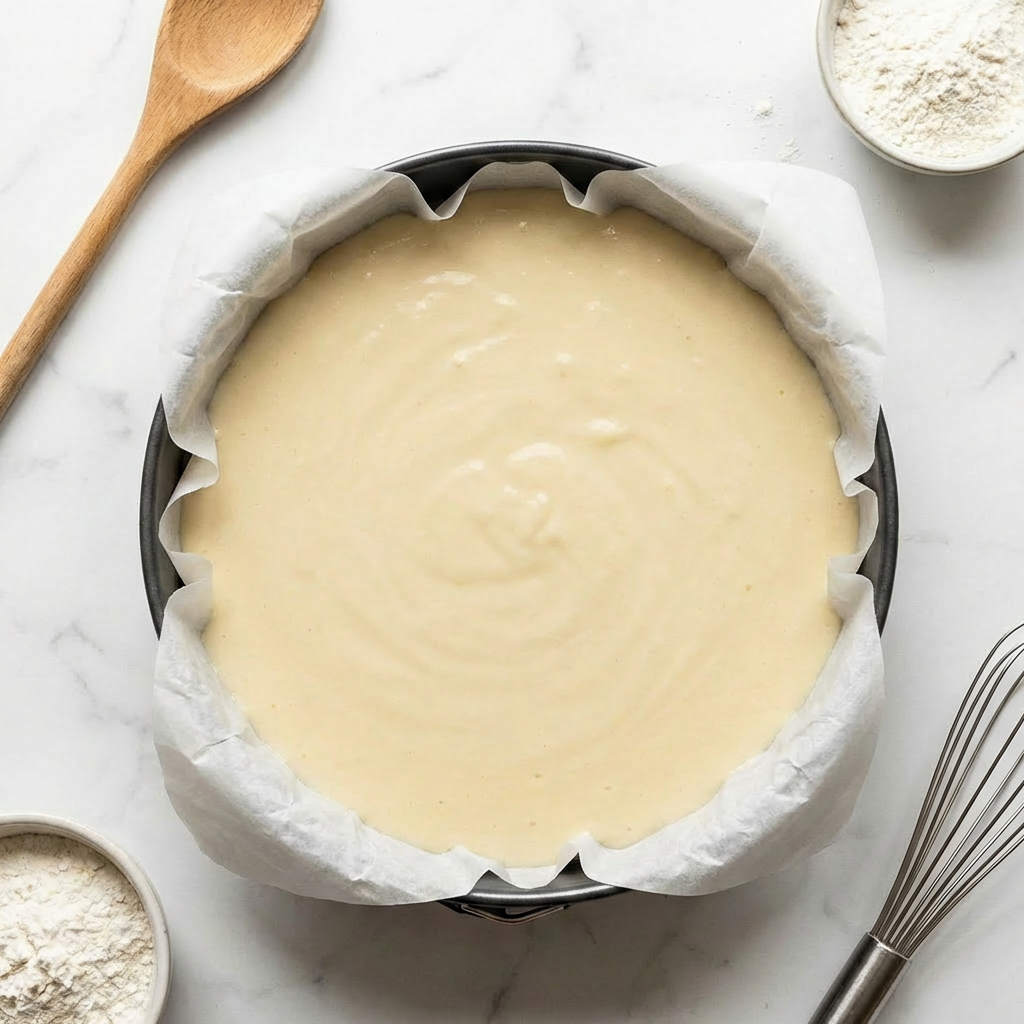
The Filled Pan Ready for Baking (Result of Pouring)
Pour the batter through a fine-mesh sieve into the prepared parchment-lined pan. This ensures an ultra-smooth final texture. Tap the pan gently on the counter to release any large air bubbles. The batter will come up high in the pan.
The Freshly Baked, Puffed Cheesecake (Result of Baking)
Bake on the middle rack for 50-60 minutes. The cake will rise dramatically, the top will become deeply dark brown to nearly black, and it will still have a pronounced, wobbly jiggle in the center when you gently shake the pan. The edges will be set and slightly pulled away from the parchment.
The Cooled & Sunken Cheesecake (Result of Cooling)
Let the cheesecake cool completely in the pan on a wire rack. As it cools, it will deflate and the center will sink, creating a beautiful, uneven surface with dramatic cracks and folds. This is exactly what you want. Refrigerate for at least 4 hours, or preferably overnight, to allow it to fully set.
Serve & Store
To serve, carefully remove the springform ring and peel down the parchment paper. Slice with a hot, clean knife (wiped between cuts). Serve chilled or at cool room temperature. Store leftovers covered in the refrigerator for up to 5 days.
Pro-Tips for the Perfect Rustic Burnt Cheesecake
- Room Temperature is Non-Negotiable: Cold cream cheese or eggs will create a lumpy batter that cannot be smoothed out. Plan ahead.
- Embrace the Dark Top: Do not be afraid of the color. A deeply caramelized, nearly black top provides the essential bittersweet counterpoint to the sweet, rich filling. It should smell toasty, not acrid.
- The Jiggle Test: The center should look underbaked and jiggle like Jell-O when you pull it from the oven. It will set as it cools. Overbaking leads to a dry, cakey texture.
- Strain the Batter: Straining may seem fussy, but it guarantees the signature velvety, custardy texture without any tiny lumps of cream cheese.
- Chill Thoroughly: The cheesecake must be completely chilled to be sliceable. The flavor also deepens overnight.
- Variations: Add the zest of one lemon for brightness, or a tablespoon of brandy or rum for depth. For a chocolate version, add ½ cup (50g) sifted cocoa powder with the flour.
The Basque Burnt Cheesecake is a testament to the beauty of imperfection and the power of simple ingredients transformed by fire.