Embark on your sourdough journey by creating a living, breathing sourdough starter from just flour and water. This detailed 7-day guide demystifies the process of capturing wild yeast and beneficial bacteria from your environment to create a natural leavening agent.
Watch as your mixture transforms from simple ingredients into a vibrant, bubbly ecosystem capable of lifting bread dough and imparting that signature tangy, complex flavor to all your baked goods.
The Science of Microbial Cultivation
Creating a starter is essentially domesticating a local microbiome. When flour and water mix, they create an ideal environment for microorganisms naturally present in the flour and your kitchen. Initially, various bacteria and yeasts compete, often causing early activity that then seems to “die” around days 3-4—this is normal as acid-producing bacteria lower the pH, creating an environment hostile to many early colonizers but perfect for the desired wild yeast and lactobacillus.
The regular feeding schedule (discarding and refreshing) provides fresh food, selectively encouraging the growth of the strong, bread-leavening microbes while starving out less desirable ones. Over 7-10 days, a stable, predictable community establishes itself, visible through consistent doubling in volume 4-8 hours after feeding and a pleasantly sour, yogurt-like aroma.
Instructions: The 7-Day Process
The Beginning
In your clean jar, mix 50g of whole rye or whole wheat flour with 50g of lukewarm (75-80°F / 24-27°C) water until no dry flour remains. The consistency should be like thick pancake batter.
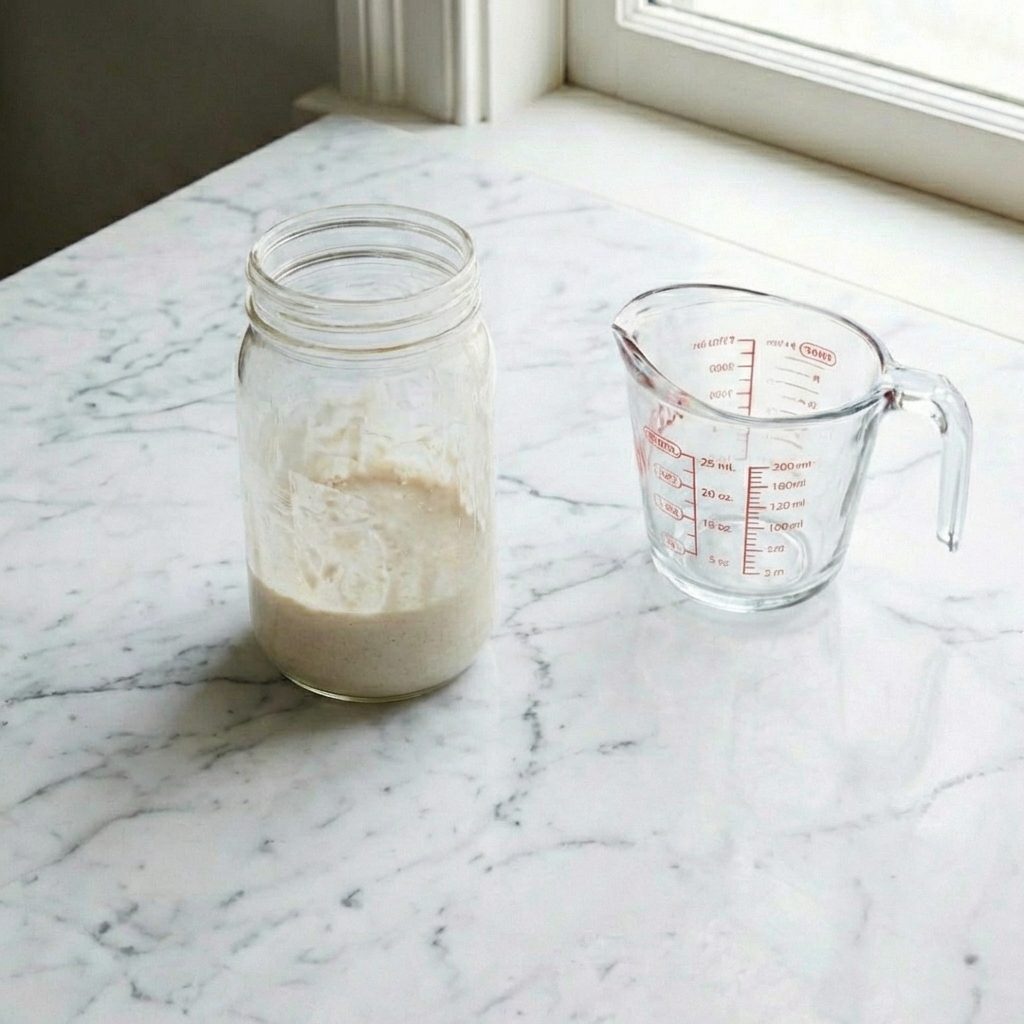
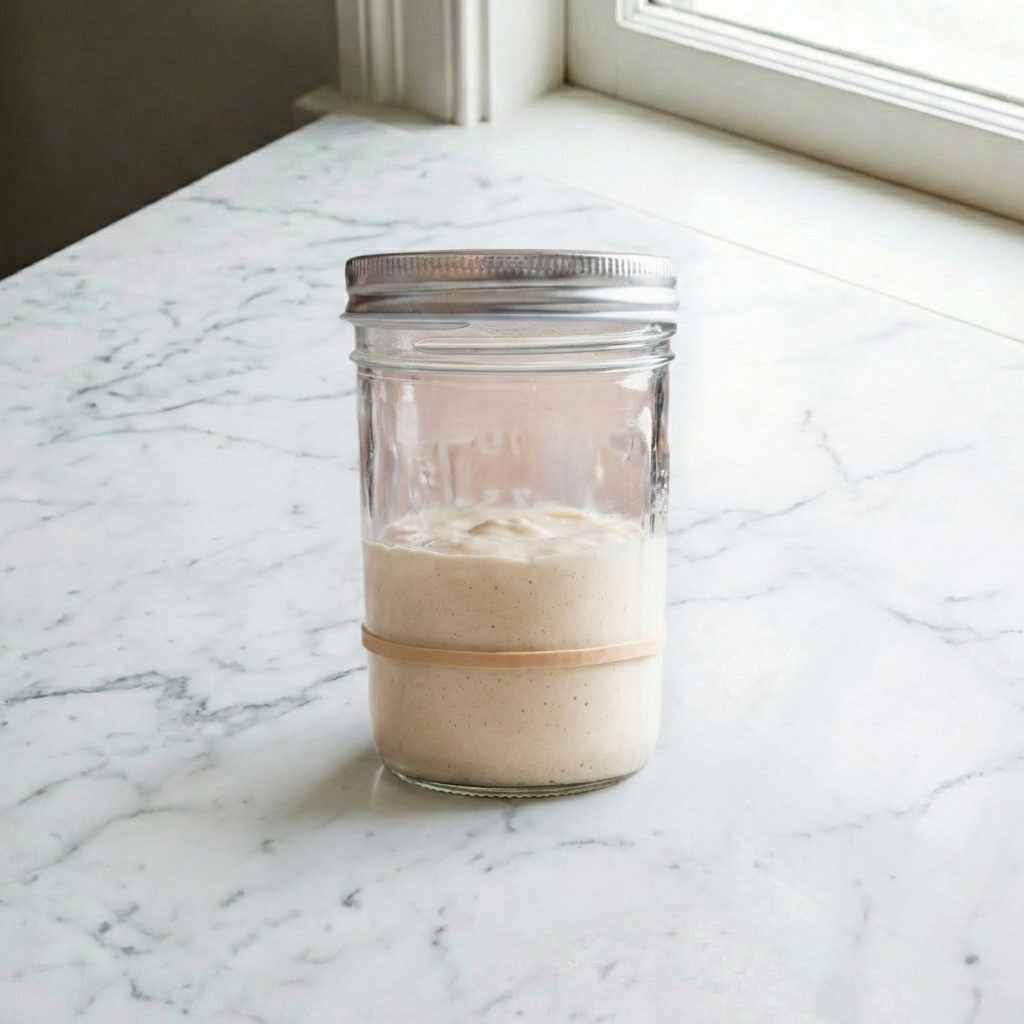
Loosely cover the jar (a lid set ajar or cloth secured with rubber band) and place in a warm spot (70-75°F / 21-24°C is ideal). Mark the starting level with a rubber band.
Early Activity (or Not)
You may see a few small bubbles or no change at all. Both are normal. Discard half (about 50g) of the mixture. To the remaining 50g, add 50g of all-purpose flour and 50g of lukewarm water. Stir well, re-cover, mark the new level, and return to its spot.
The “False Peak” & Slump
Activity often increases dramatically—bubbles, rise, and a pungent, sometimes cheesy or acetone smell. This is the bacterial bloom. It may collapse and smell strongly acidic. Don’t worry! Continue the daily routine: Discard all but 50g of starter. Feed with 50g all-purpose flour and 50g water. Stir, cover, mark.
Stability & Rise
After the bacterial activity subsides, true wild yeast establishes itself. The aroma should become more pleasant—fruity, yogurt-like, or tangy.
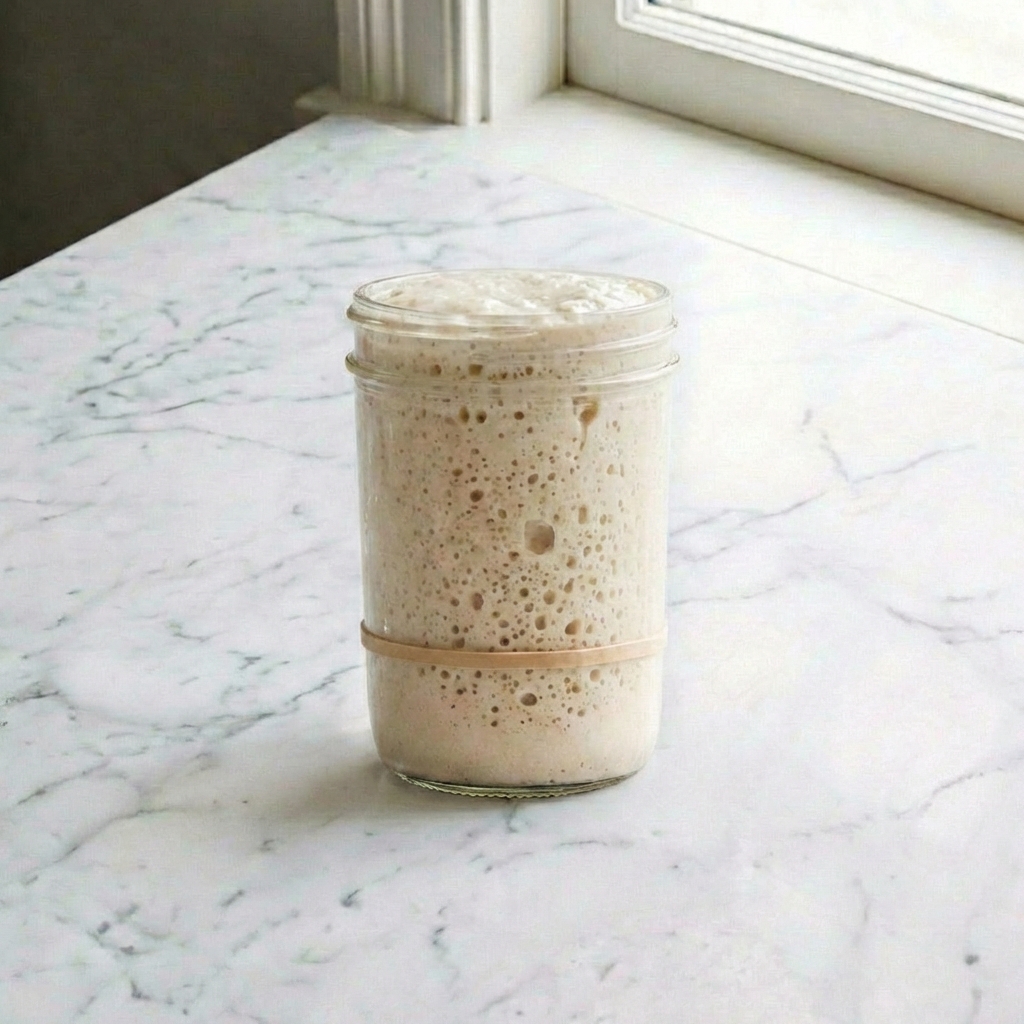
You should see consistent bubbles throughout and the starter should reliably double in volume within 4-8 hours of feeding. This is the sign of readiness. Continue daily feedings until this happens consistently for 2-3 days.
Maintaining Your Active Starter: Once established, you have two options: Room Temperature Maintenance: If baking daily, keep at room temp and feed every 12-24 hours.
Refrigerator Storage: For weekly baking, feed the starter, let it peak (about 6-8 hours), then store in the fridge. Feed once a week. To use, take from fridge, feed, and let it become active again (may take 2 feedings).
Testing Starter Readiness (The Float Test)
To confirm your starter is ready for baking, perform the float test: Drop a small spoonful of your peak (bubbly, just-fed) starter into a glass of room-temperature water. If it floats, it’s sufficiently aerated and active to leaven bread. If it sinks, it needs another feeding or more time to mature.
Pro-Tips for Starter Success
- Consistency is Key: Feed at roughly the same time each day.
- Use a Scale: Weight is far more accurate than volume for flour and water.
- Watch Temperature: Starter thrives in consistent warmth. A cooler spot slows progress; a warmer spot (up to 85°F/29°C) speeds it up.
- Don’t Fear the Discard: The “discard” is simply unfed starter. Store it in the fridge and use in discard recipes like pancakes, crackers, or quick breads.
- Patience Over Perfection: Some starters take 10-14 days. Signs of health (bubbles, pleasant smell) are more important than the calendar.
- Name Your Starter! It makes the process more personal.
- Troubleshooting: A gray liquid (hooch) on top means it’s hungry—just stir it in and feed. A pink or orange tint indicates harmful bacteria—discard and start over.
With care, your homemade sourdough starter can last a lifetime.