Indulge in the rich, comforting flavor of this deeply chocolate sourdough bread. This isn’t a marbled loaf, but a uniformly dark, cocoa-infused bread with a subtle tang from slow fermentation and sweet pockets of melted chocolate chips.
With a crisp crust and a soft, tender crumb, it’s a luxurious treat perfect for afternoon tea, decadent French toast, or as a special homemade gift for any chocolate lover.
The Science of a Uniform Chocolate Crumb
This bread achieves its consistent dark color and rich flavor through complete cocoa integration and enriched dough chemistry. Unlike marbled breads, the cocoa powder is incorporated into the entire dough during mixing, ensuring every bite carries the deep, bitter-sweet notes of chocolate.
Cocoa powder is hydrophilic (water-loving) and contains starch and fiber, which absorb liquid and can make dough stiff. To counter this, the hydration is slightly increased, and the dough is given a long autolyse to fully hydrate the cocoa and flour.
The added sugar and oil tenderize the crumb and balance cocoa’s bitterness, while the robust sourdough fermentation cuts through the richness, preventing the loaf from being overly sweet. The chocolate chips are added during the final folds to distribute them evenly without overworking the dough.
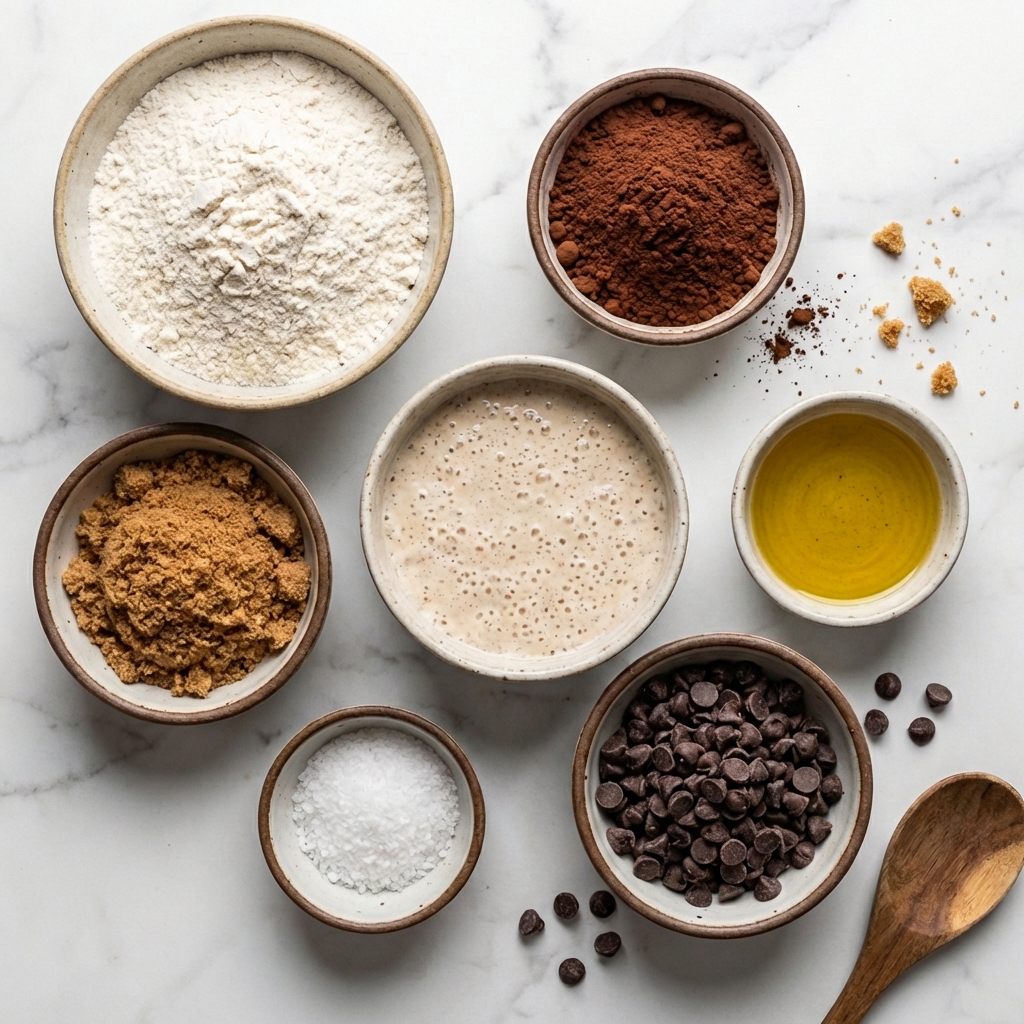
Instructions
Mix the Dough & Autolyse
In a large bowl, whisk together the warm water, active starter, and cocoa powder until smooth and no lumps remain. Add the bread flour and brown sugar.
Mix with a spatula or your hands until a shaggy dough forms with no dry flour. Cover and let rest (autolyse) for 1 hour. This allows the cocoa and flour to fully hydrate.
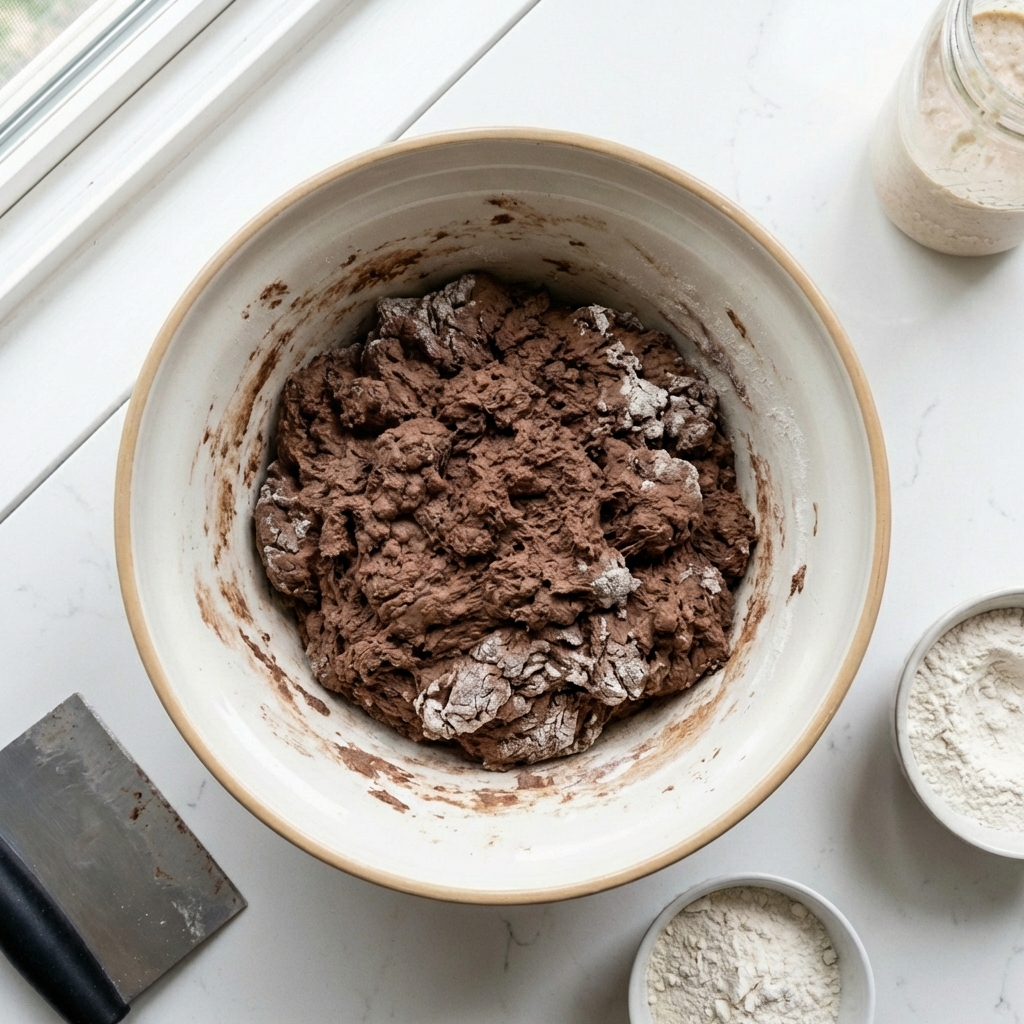
Add Salt & Oil
After the autolyse, add the salt and oil to the dough. Mix thoroughly, squeezing and folding the dough in the bowl until the salt and oil are fully incorporated. The dough will be sticky and dark.
Bulk Fermentation with Folds
Cover the bowl and let the dough rise at room temperature (70-75°F / 21-24°C) for 5-6 hours. During the first 2.5 hours, perform 4-5 sets of stretch and folds, spaced 30 minutes apart. After the third set of folds, gently incorporate the chocolate chips by sprinkling them over the dough and folding them in.
Complete the remaining folds. Let the dough rest undisturbed for the remainder of bulk fermentation. It should look puffy, have bubbles, and increase by about 50-60%.
Shape & Cold Proof
Gently turn the dough out onto a lightly floured surface. Shape it into a tight round (boule) or oval (batard), being careful not to pop the visible bubbles. Place it seam-side up in a well-floured banneton or proofing basket. Cover and place in the refrigerator for 12-16 hours (overnight) for a cold proof.
Bake
Preheat a Dutch oven or combo cooker in your oven at 425°F (220°C) for 1 hour. Carefully remove the cold dough from the fridge and invert it onto a piece of parchment paper. If desired, mist the top lightly with water and sprinkle with rolled oats or pearl sugar.
Score the top with a sharp lame or razor—a simple “X” or single slash works well. Transfer the dough (on the parchment) into the preheated Dutch oven, cover, and bake for 30 minutes. Remove the lid and bake for another 20-25 minutes until the crust is firm and sounds hollow when tapped.
Cool Completely
Transfer the loaf to a wire rack and let it cool completely for at least 4 hours before slicing. This is crucial for the crumb to set and the chocolate to solidify, ensuring clean slices.
Pro-Tips for a Perfect Chocolate Loaf
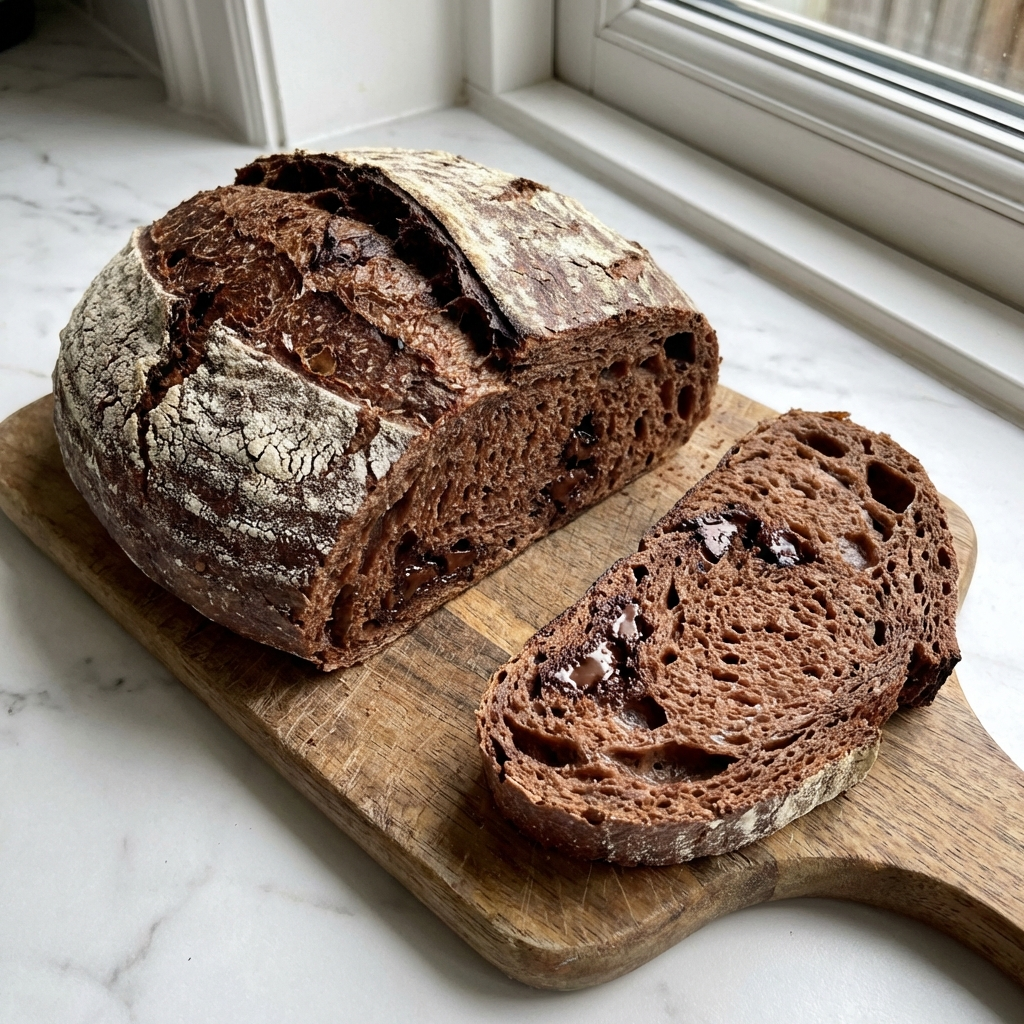
- Use Dutch-Process Cocoa: It has a richer, less acidic flavor than natural cocoa and gives a darker color.
- Ensure a Smooth Cocoa Paste: Whisking the cocoa with water and starter first prevents dry lumps in your dough.
- Higher Hydration: Cocoa absorbs a lot of water. The dough will be stickier than a plain loaf—avoid adding too much extra flour.
- Add Chips During Folds: Incorporating chocolate chips during bulk fermentation prevents them from sinking to the bottom during baking.
- Cold Proof for Flavor: The overnight rest deepens the chocolate flavor and makes the dough easier to handle.
- Lower Baking Temperature: Sugar and chocolate can cause quicker browning. Baking at 425°F instead of the typical 450°F prevents burning.
- Wait to Slice: The molten chocolate will smear if you cut the bread warm.
- Storage: Store in a paper bag for 1-2 days to keep the crust crisp. For longer storage, wrap in plastic and freeze for up to 2 months.
This Chocolate Sourdough Bread is a deeply satisfying, decadent twist on a classic loaf.