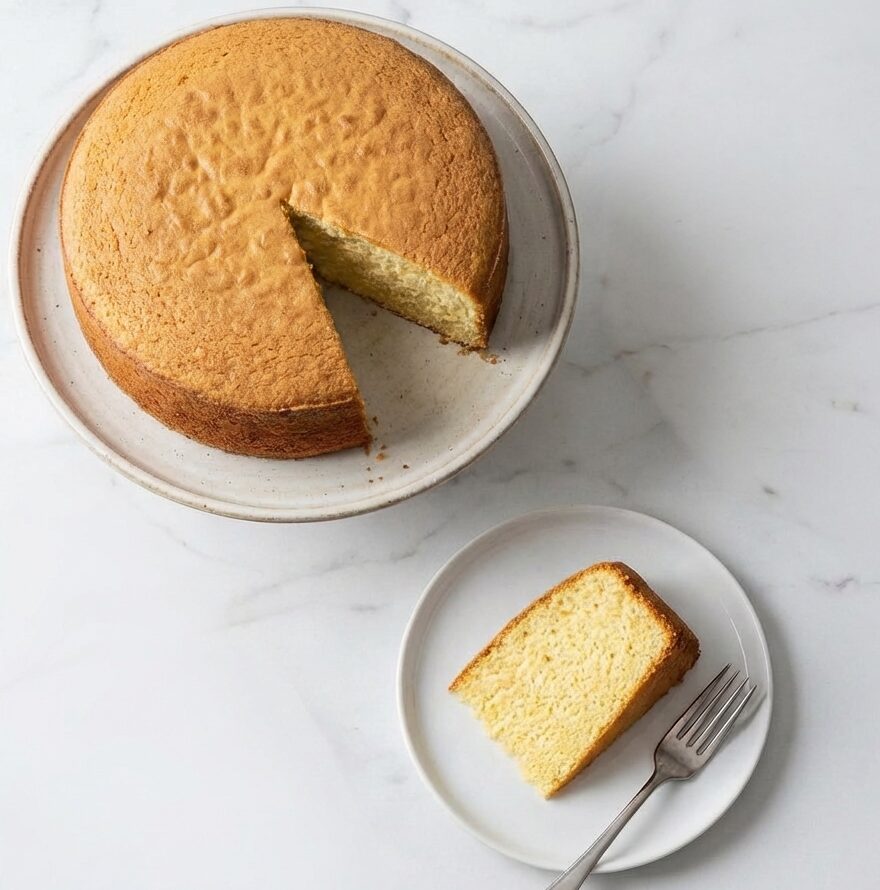
The Genoise is the workhorse of the patisserie world—a versatile, elegant sponge cake that is deceptively simple in ingredients but requires precision in technique. Unlike American cakes that use chemical leaveners, the Genoise gets its remarkable volume solely from air whipped into the eggs.
Enriched with melted butter for flavor and tenderness, it has a fine, uniform crumb that soaks up syrups beautifully, making it the ideal base for layered tortes, rolled cakes, and sophisticated desserts like tiramisu.
The Science of the Ribbon Stage & Stabilizing the Foam
The entire structure of a Genoise relies on the egg foam. Whole eggs and sugar are warmed gently over a water bath (bain-marie) to about 110°F (43°C) to dissolve the sugar and make the eggs more elastic.
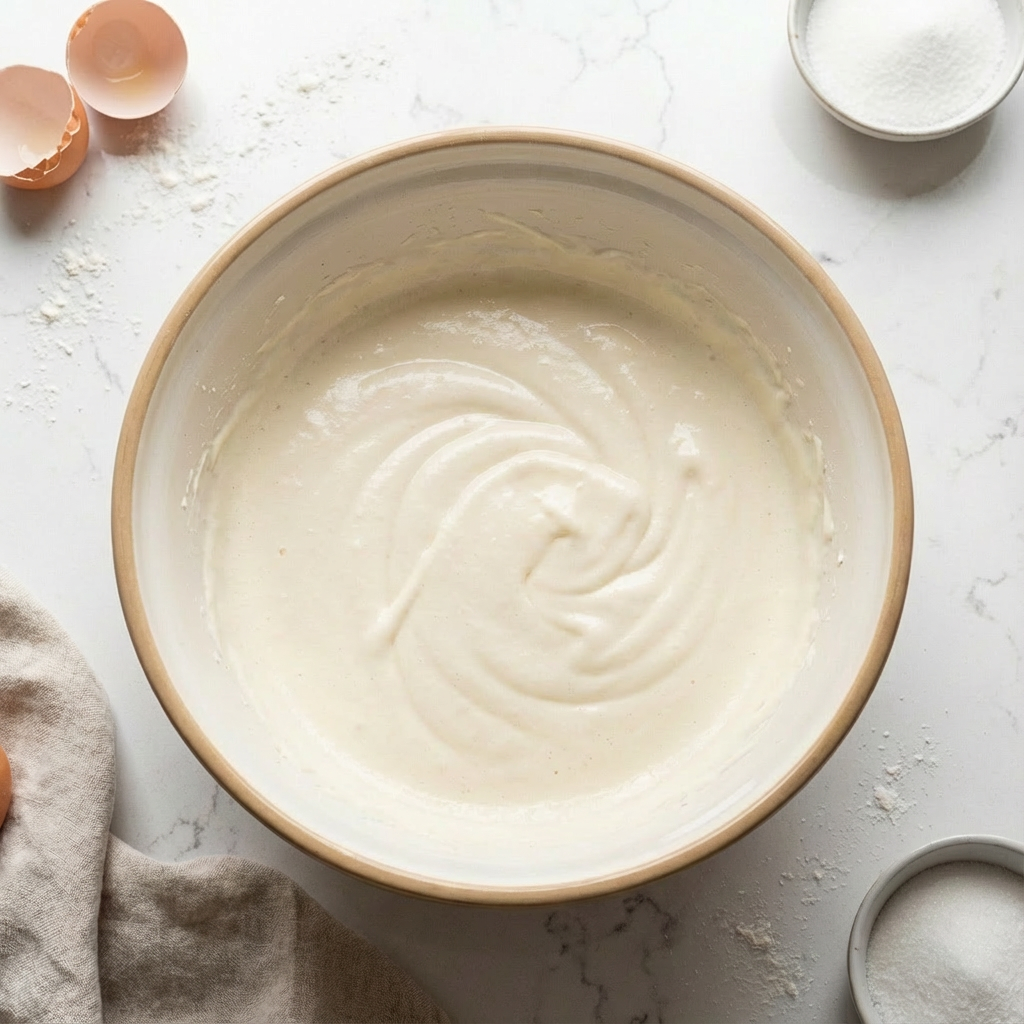
They are then whipped at high speed until they reach the “ribbon stage”: the mixture becomes very thick, pale, and falls from the whisk in a thick ribbon that holds its shape on the surface for several seconds. This creates a stable network of tiny air bubbles.
The flour is then sifted and folded in with extreme care to avoid deflating this delicate foam. Finally, warm melted butter is folded in, which adds flavor but must be incorporated gently to maintain volume.
Instructions
Prepare Pan & Oven
Preheat oven to 350°F (175°C). Grease the bottom (not the sides) of an 8-inch round cake pan. Line the bottom with parchment paper. Do not grease the sides, as the batter needs to cling to them to rise properly.
Warm & Whip Eggs to Ribbon Stage
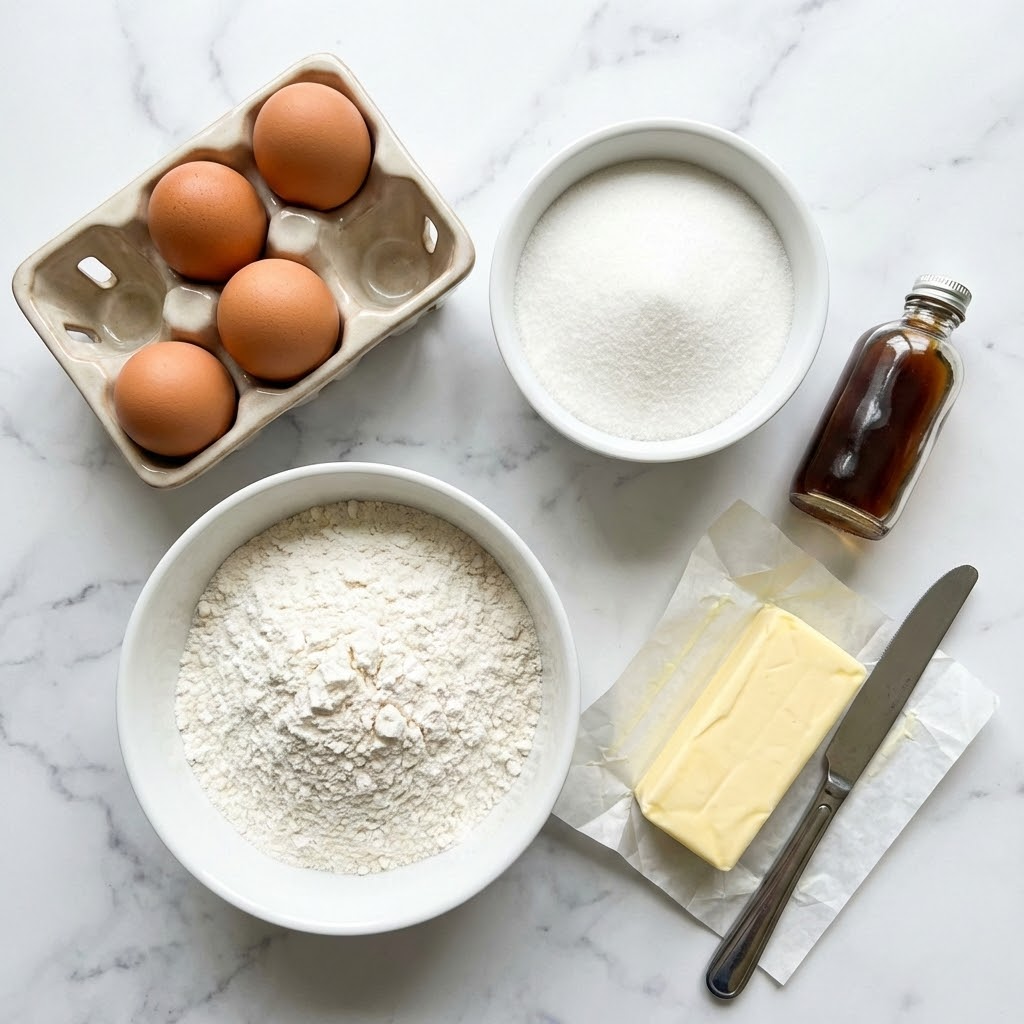
In a large heatproof bowl, combine the eggs, sugar, vanilla, and salt. Place the bowl over a pot of simmering water (bain-marie), ensuring the bottom of the bowl does not touch the water.
Whisk constantly by hand until the mixture is just warm to the touch (about 110°F / 43°C) and the sugar is dissolved—it will feel smooth, not grainy. Remove from heat.
Achieve Full Volume
Using a hand mixer or stand mixer fitted with the whisk attachment, whip the warm egg mixture on high speed for 5-8 minutes. It is ready when it is very thick, pale yellow, and has tripled in volume. When you lift the whisk, the batter should fall in a thick ribbon that holds its shape on the surface for at least 3 seconds.
Fold in Flour & Butter
Sift half of the cake flour over the egg foam. Using a large balloon whisk or flexible spatula, gently fold until mostly incorporated. Sift the remaining flour over the top and fold just until no dry streaks remain.
Take about 1 cup of this batter and fold it into the slightly warm melted butter in a separate bowl to lighten it. Then, gently fold this butter mixture back into the main batter until just combined.
Bake Immediately
Pour the batter into the prepared pan and gently smooth the top. Tap the pan lightly on the counter to release large air bubbles. Bake for 25-30 minutes, until the top is golden brown, springs back when lightly touched, and the edges just begin to pull away from the pan.
Cool Upside Down
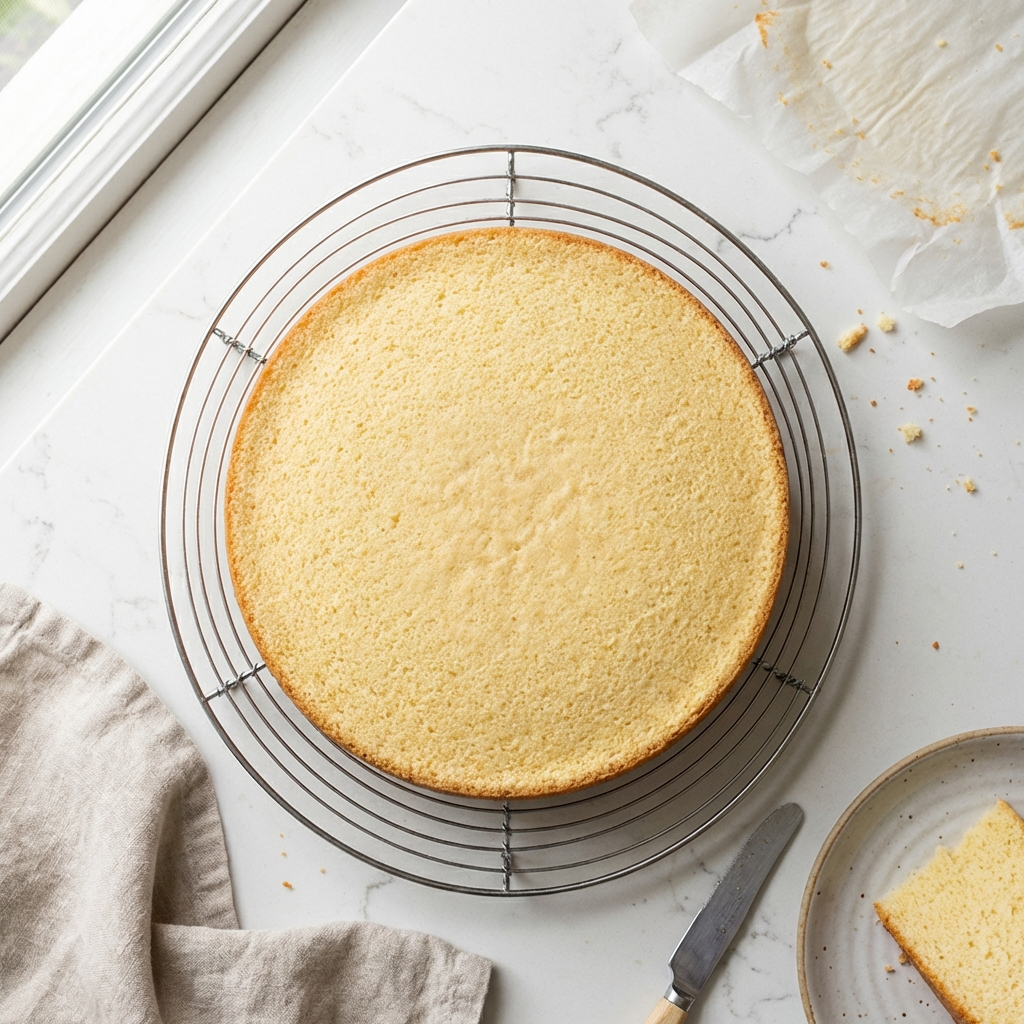
Immediately upon removing from the oven, run a thin knife around the edge of the pan to loosen the cake. Invert the cake onto a wire rack and remove the pan. Peel off the parchment paper. Let the cake cool completely upside down on the rack. This prevents it from collapsing.
Pro-Tips for a Light, Tall Genoise
- Room Temperature Eggs are Essential: Cold eggs will not whip to the necessary volume.
- Dissolve the Sugar Completely: The warming step is crucial. If the sugar isn’t fully dissolved, the eggs won’t whip properly and the cake may be grainy.
- Whip to Full Ribbon Stage: Do not under-whip. The ribbon must hold its shape. This is your only leavening.
- Use Cake Flour: Its lower protein content is essential for a tender crumb. If you must substitute, use 7/8 cup all-purpose flour + 2 tablespoons cornstarch per cup of cake flour.
- Fold with a Light Hand: Use a whisk or spatula in a gentle “J” folding motion. Over-mixing or stirring will deflate the batter.
- Cool Upside Down: This traditional step helps stretch the delicate cake structure as it cools, preventing sinking.
This Classic Genoise Sponge Cake is the first step to creating stunning, professional-quality desserts.