Palmiers are the ultimate example of culinary alchemy: transforming a sheet of store-bought puff pastry and a pile of sugar into elegant, shatteringly crisp, caramelized cookies. Their beautiful heart shape and glass-like crunch make them look like they came from a fancy patisserie, yet they are deceptively simple to make.
With just a few folds, a sprinkle of sugar, and a hot oven, you can create these irresistible treats that are perfect for any occasion.
The Science of Caramelization & The “Double-Fold”
The magic of a perfect palmier lies in two processes: laminated layers and sugar caramelization. Store-bought puff pastry is made up of hundreds of thin layers of dough separated by butter. When baked, the water in the butter and dough turns to steam, pushing the layers apart to create incredible flakiness.
The heavy coating of granulated sugar plays a dual role: it draws out moisture from the pastry’s surface, promoting crispness, and it melts and caramelizes in the oven’s heat, creating that signature glossy, sweet, crunchy exterior.
The classic “double-fold” technique—rolling each side inward to meet at the center—creates the tight, concentric layers that fan out into the iconic heart shape during baking.
Instructions
Prepare the Sugared Surface
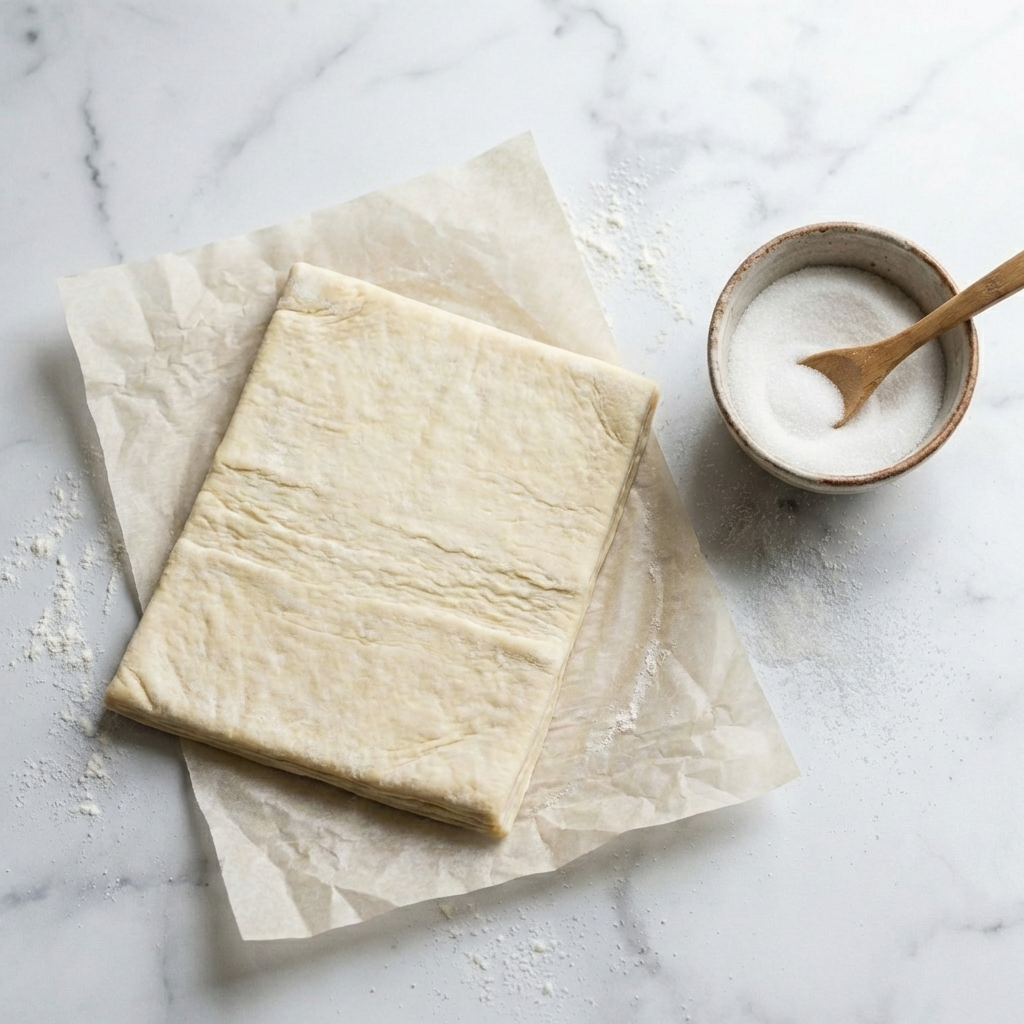
Unfold the thawed puff pastry sheet on a piece of parchment paper. If it has creases, gently roll it with a rolling pin to smooth them out. Brush lightly with melted butter (if using).
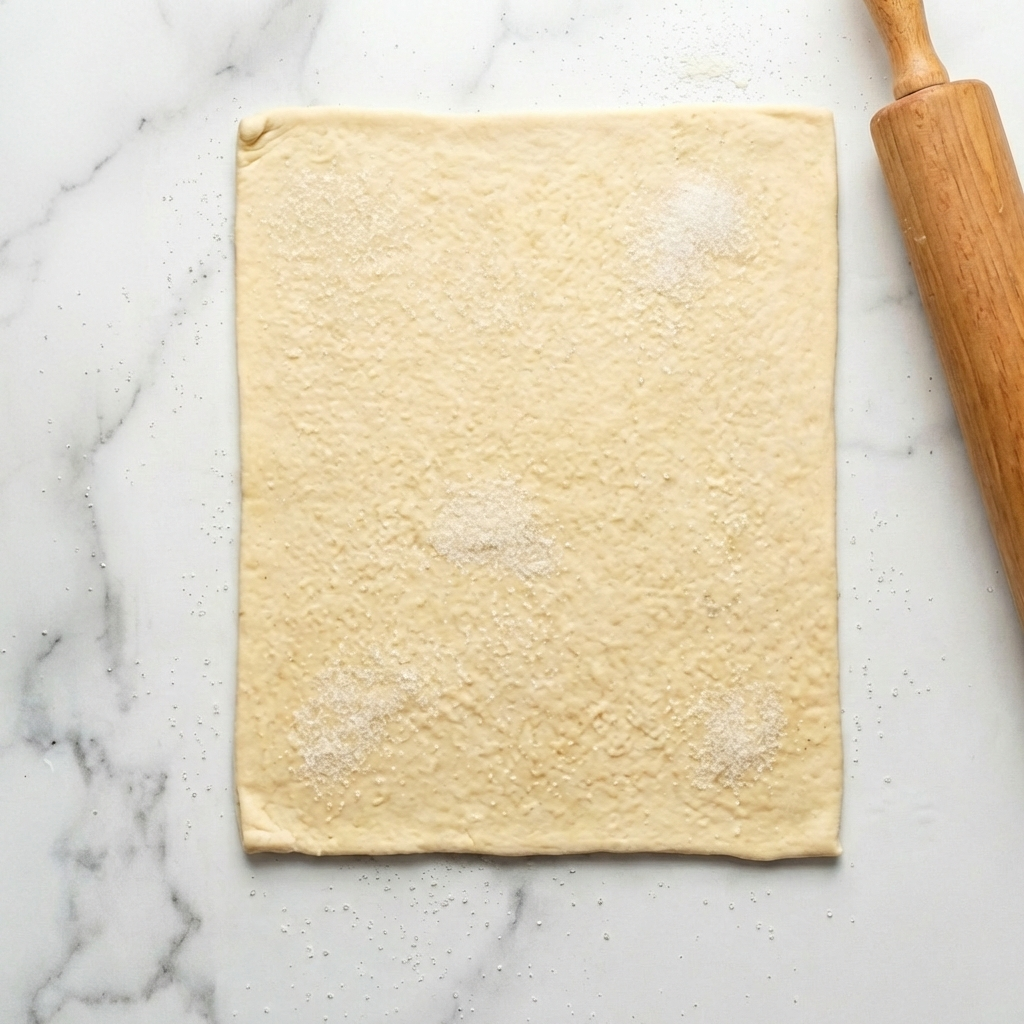
Sprinkle the entire surface evenly with ¼ cup of the granulated sugar and a tiny pinch of salt. Use the rolling pin to gently press the sugar into the dough.
Fold into the Classic Heart Shape
Imagine a center line running the length of the pastry. Fold one long side inward so it reaches the imaginary center line. Repeat with the opposite long side, so the two folds meet in the middle but do not overlap. You should now have a long, rectangular strip with two folds.
Sprinkle the top with another 2 tablespoons of sugar. Now, fold one side over the other, as if closing a book. You will have a long, narrow log consisting of six layers of pastry. Wrap in plastic and refrigerate for 30 minutes to firm up.
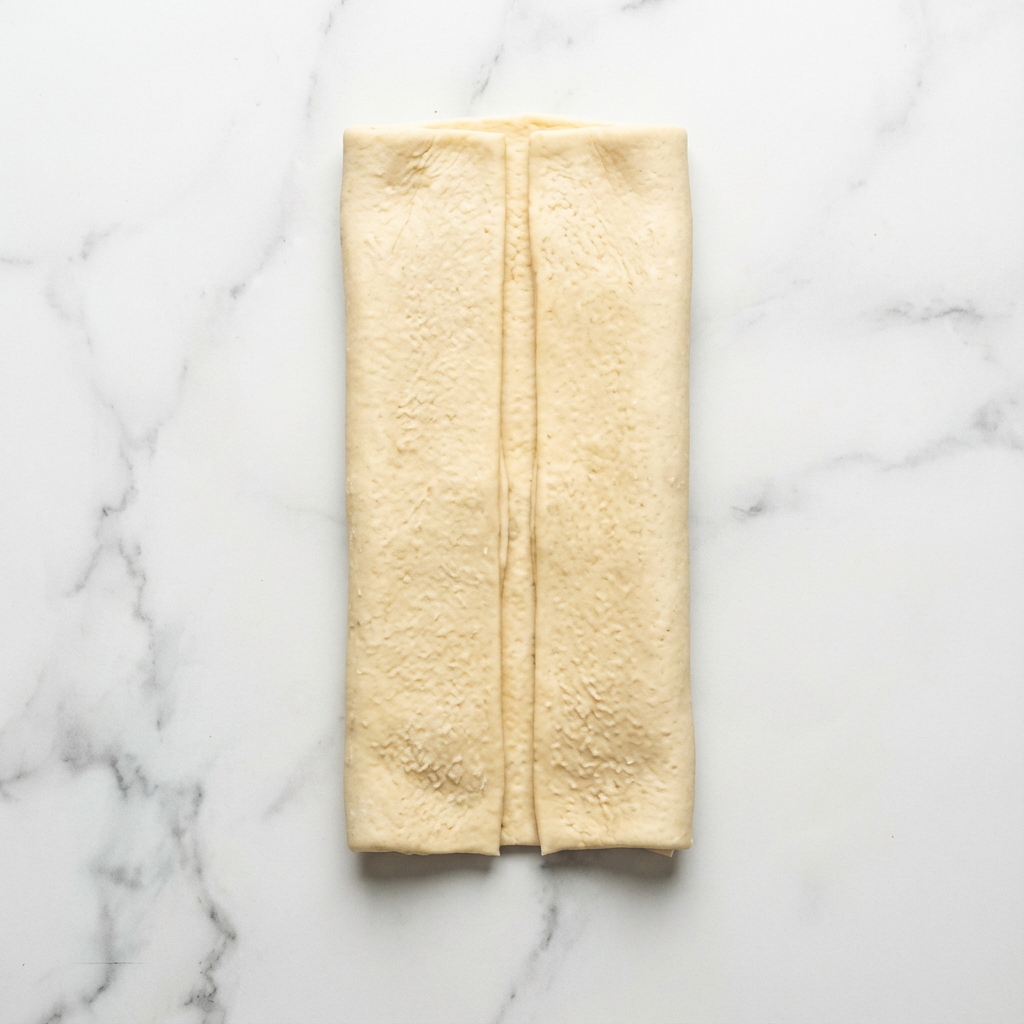
Slice & Coat
Preheat oven to 400°F (200°C). Line a baking sheet with parchment paper. Remove the chilled log from the fridge. Using a sharp knife, slice the log into ½-inch thick pieces. Dip both cut sides of each slice into the remaining sugar to coat thoroughly.
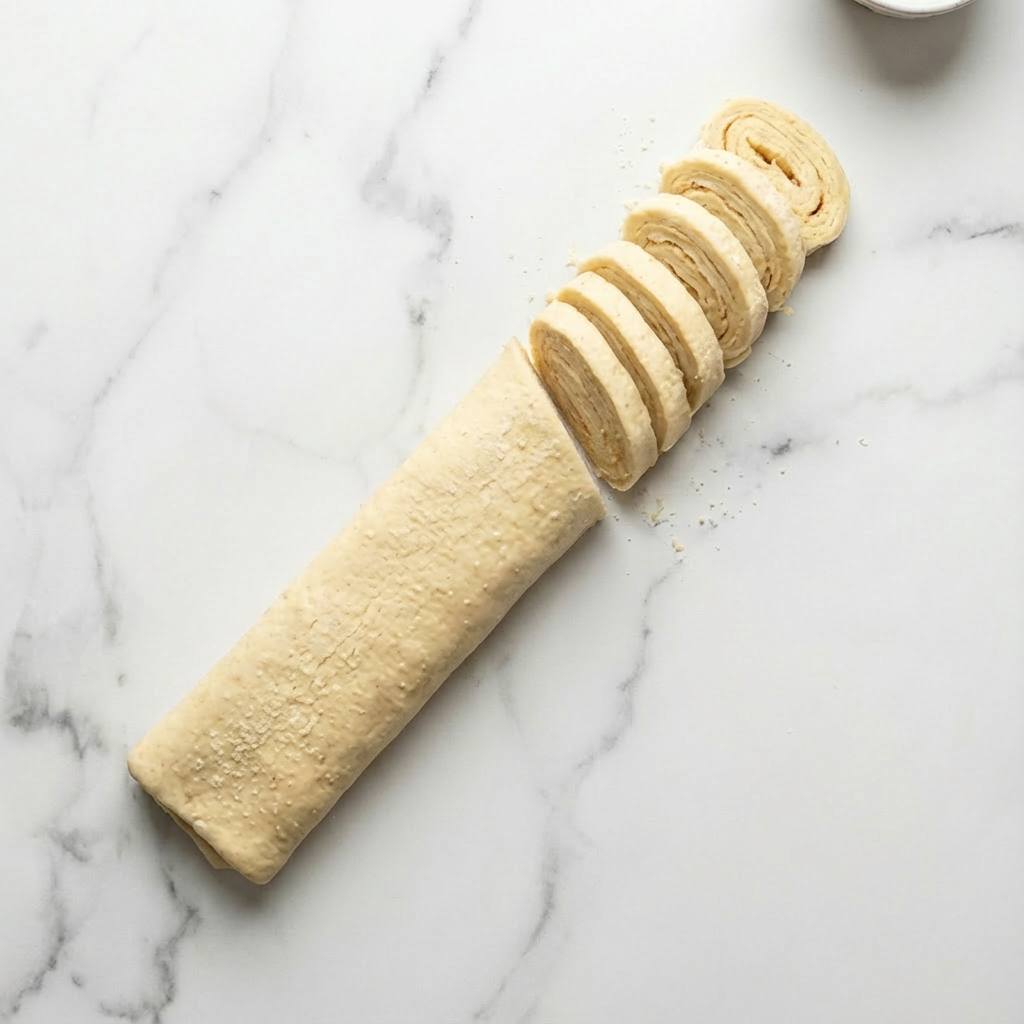
Bake Until Golden & Caramelized
Place the slices cut-side up on the prepared baking sheet, spaced about 2 inches apart (they will spread significantly). Bake for 10 minutes. The sugar will begin to melt and bubble. Carefully flip each palmier with a thin spatula. Bake for another 5-8 minutes, until deeply golden brown and caramelized on both sides.
Cool & Crisp Up
Transfer the palmiers to a wire rack. They will be soft when hot but will become perfectly crisp as they cool. Let cool completely.
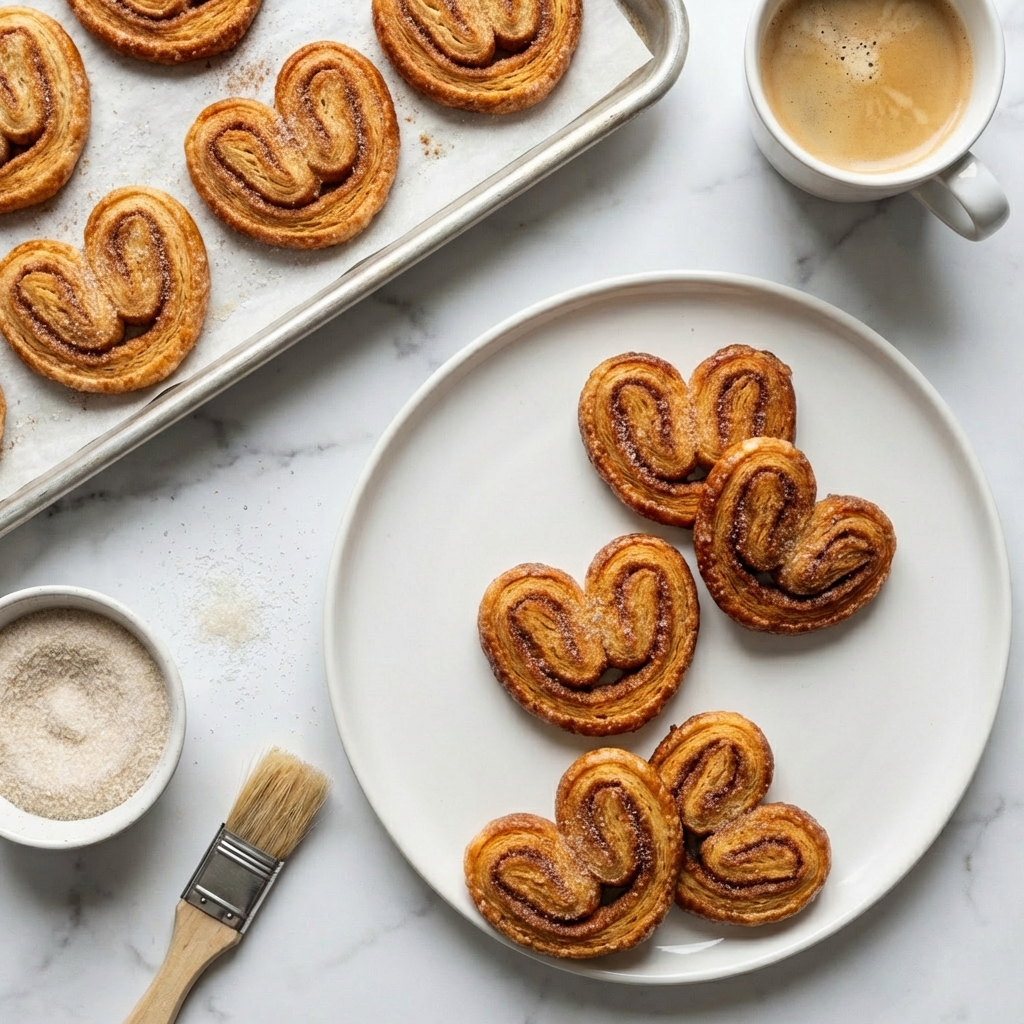
Serve
Once completely cool, dust lightly with confectioners’ sugar if desired. Serve at room temperature. They are best the day they are made but can be stored in an airtight container for 2-3 days.
Pro-Tips for Perfectly Crisp, Caramelized Palmiers
- Use Cold Puff Pastry: Work with the pastry while it’s still cold from the fridge for clean folds and to prevent the butter from melting.
- Generous Sugar Coating: Don’t be shy with the sugar—it’s what creates the signature caramelized crunch and glossy finish.
- Sharp Knife for Slicing: Use a very sharp knife and a clean sawing motion to slice the log without squashing the delicate layers.
- Watch Closely While Baking: Sugar can go from perfectly caramelized to burnt quickly. The second side often needs less time than the first.
- Space Them Out: The palmiers will spread and release sugar syrup as they bake. Giving them ample space prevents sticking and merging.
- Cool on a Rack: This allows air to circulate, preventing sogginess and ensuring maximum crispness.
These Classic Palmiers are a simple yet spectacular way to elevate everyday ingredients.