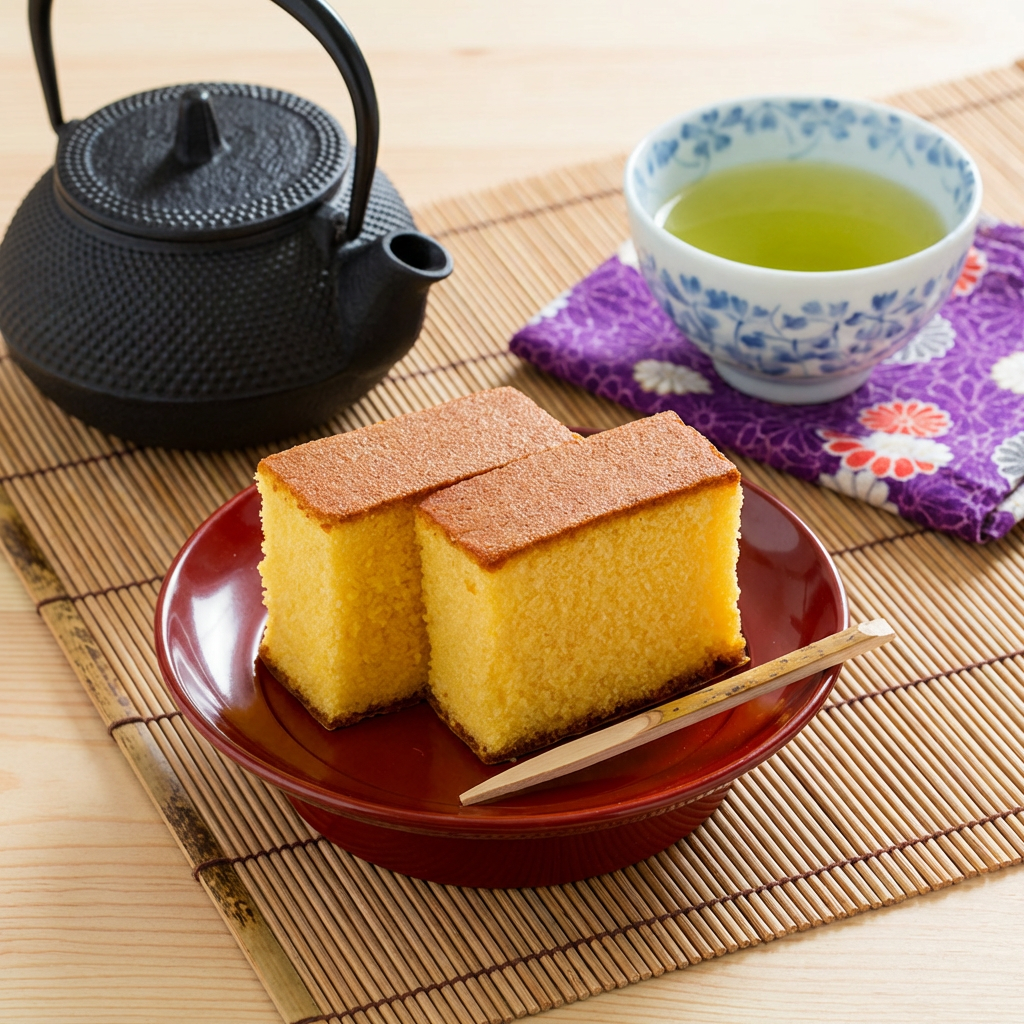
Castella is a legendary Japanese sponge cake with Portuguese origins, perfected in Nagasaki. Known for its signature rectangular shape, flat top, and incredibly soft, moist, and elastic texture, it’s a dessert that feels like a cloud yet has a satisfying richness.
The recipe is deceptively simple—eggs, sugar, flour, and honey—but the technique is everything. Through careful folding, a special water bath, and a long, slow bake, the cake develops a fine, velvety crumb that is both jiggly and substantial.
Traditionally baked in a wooden box (which insulates and steams the cake), it’s a subtly sweet, comforting treat enjoyed with tea and celebrated for its beautiful simplicity.
The Science of the Jiggly, Moist Crumb
The magical texture of Castella comes from two key techniques: extreme aeration of the eggs and gentle, steam-assisted baking. The eggs and sugar are warmed slightly (often over a water bath) and then whipped for an extended period—up to 10-15 minutes—until they reach a thick, pale, ribbon-like consistency.
This creates a stable foam with thousands of tiny air bubbles that form the cake’s structure. The flour is then folded in with extreme care to avoid deflating this precious foam. The cake is baked in a hot water bath (bain-marie) at a relatively low temperature.
The steam from the water bath ensures gentle, even heat, preventing the cake from drying out or forming a hard crust. It promotes a slow rise and sets the egg proteins gently, resulting in an exceptionally moist, springy, and tender cake with its characteristic flat top. The honey in the batter not only sweetens but also helps retain moisture for days.
Instructions
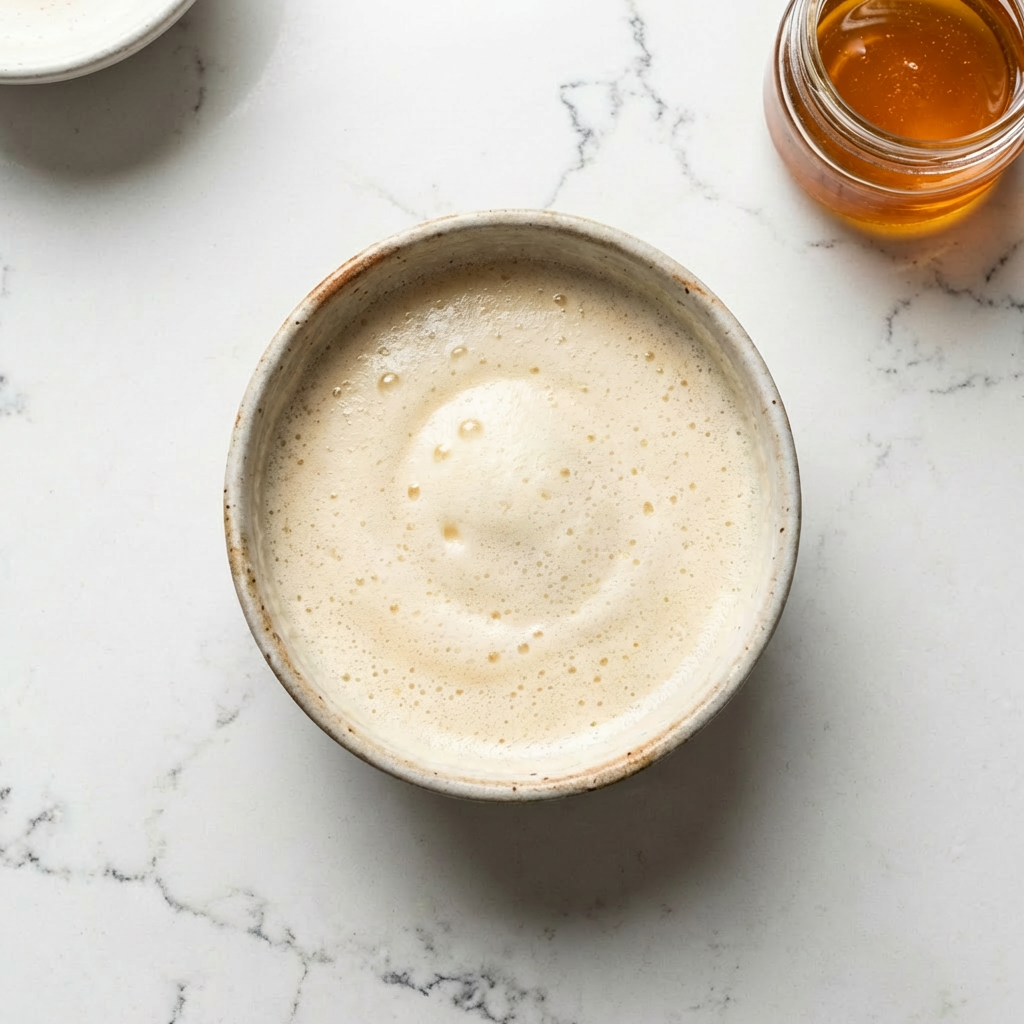
The Ribbon-Stage Egg Foam (Result of Whipping)
Preheat oven to 320°F (160°C). Line an 8×4 inch loaf pan with parchment paper, leaving overhang on all sides for easy removal. In a large heatproof bowl, combine eggs and sugar.
Place the bowl over a pot of simmering water (double boiler), ensuring the bottom doesn’t touch the water. Whisk constantly for 5-7 minutes until the sugar is completely dissolved and the mixture is warm to the touch (about 105°F / 40°C).
Remove from heat. Using a hand mixer or stand mixer, whip on high speed for 8-10 minutes until the mixture is very thick, pale yellow, and forms a thick ribbon that holds its shape for a few seconds when the whisk is lifted.
The Lightened Honey-Milk Mixture (Result of Tempering)
In a small bowl, mix the 2 tablespoons of honey and warm water/milk until combined. Take about 1 cup of the whipped egg foam and gently whisk it into the honey mixture to lighten it. This makes it easier to incorporate without deflating the main foam.
The Folded Batter (Result of Incorporating Dry Ingredients)
Sift the bread flour over the remaining egg foam in three additions. Using a large flexible spatula, fold gently after each addition until just combined—do not overmix.
Pour the lightened honey mixture around the edge of the bowl and fold gently to incorporate. Finally, drizzle the cooled melted butter around the edge and fold gently until the batter is smooth, shiny, and flowing like thick pancake batter.
The Prepared Pan in Water Bath (Result of Pan Prep)
Pour the batter from a low height into the prepared loaf pan. Tap the pan firmly on the counter 2-3 times to release large air bubbles. Place the loaf pan inside a larger roasting pan. Pour hot water into the roasting pan until it comes halfway up the sides of the loaf pan.
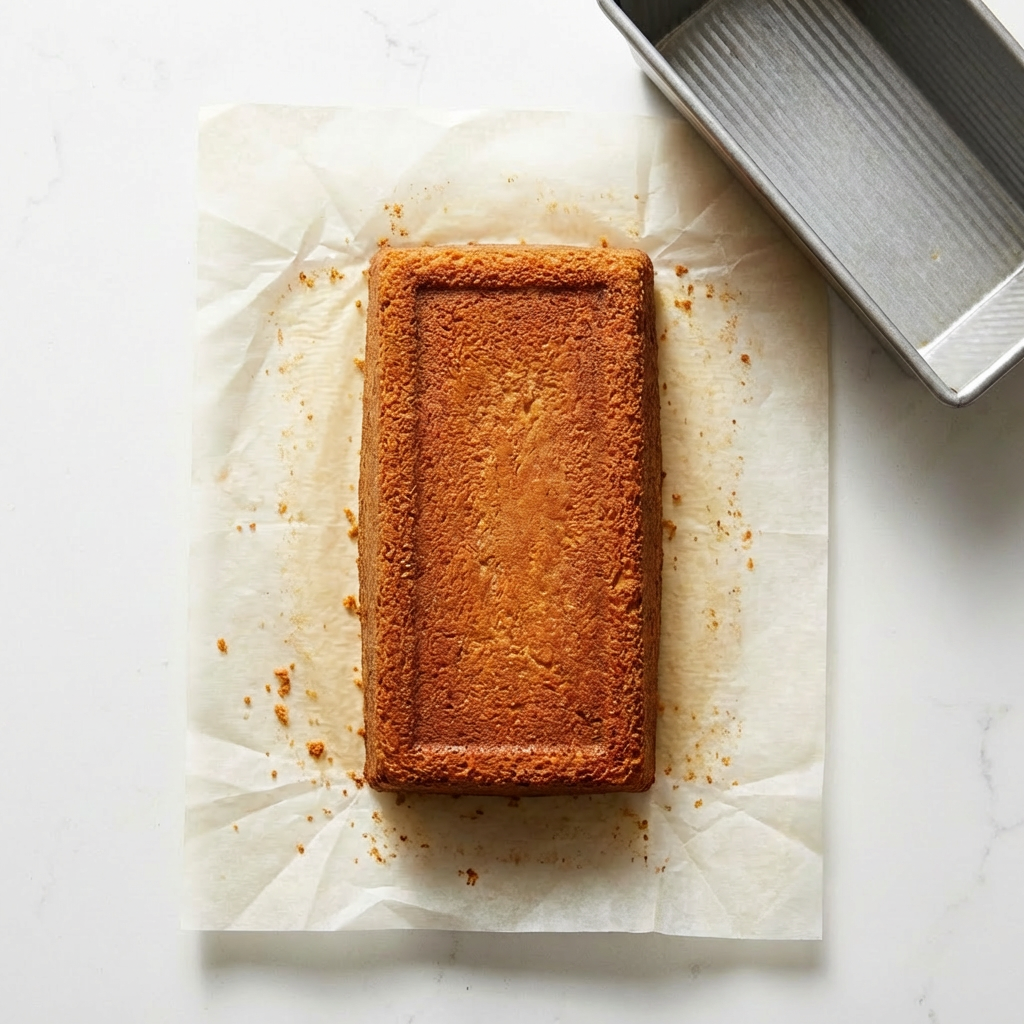
The Freshly Baked Cake (Result of Baking)
Bake for 55-65 minutes. The cake is done when the top is a deep golden brown, springs back when lightly touched, and a skewer inserted comes out clean. If the top browns too quickly, tent loosely with foil.
The Inverted & Wrapped Cake (Result of Immediate Post-Bake Steps)
As soon as the cake comes out of the oven, run a thin knife around the edges (not lined by parchment) and immediately invert it onto a sheet of parchment paper on a flat surface.
Peel off the parchment from the bottom (now top) of the cake. While still hot, brush the top with 1 tablespoon of honey mixed with ½ teaspoon of water. Carefully re-invert the cake so the honey-brushed side is up. Wrap the entire warm cake tightly in plastic wrap while it’s still in its rectangular shape. This traps steam and ensures even moisture distribution.
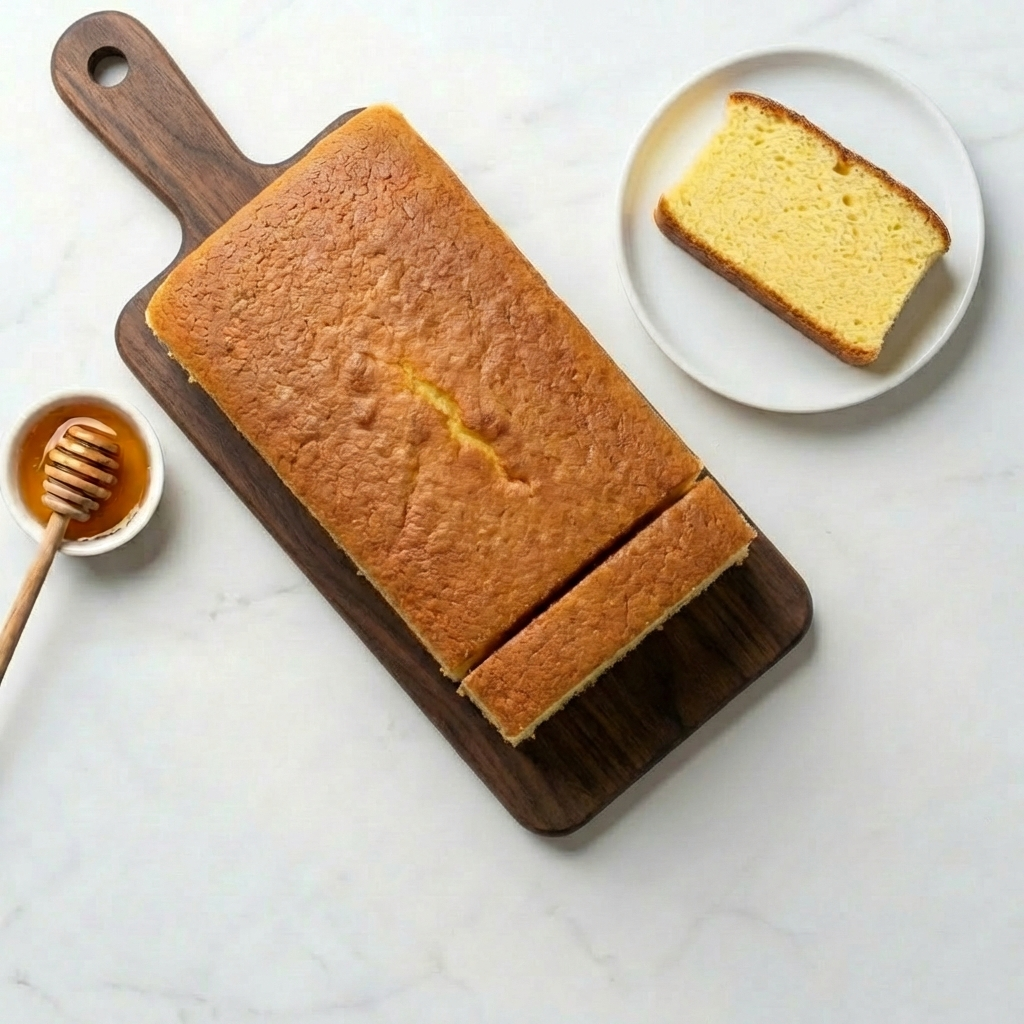
The Cooled, Pressed & Sliced Cake (Result of Resting)
Place the wrapped cake in a sealed container or bag and refrigerate for 6-8 hours or overnight. Before slicing, place the unwrapped cake between two flat boards or plates with a light weight on top for 1-2 hours to create perfectly straight sides. Slice with a sharp, serrated knife dipped in hot water.
Serve & Store
Serve at room temperature. Store wrapped in the refrigerator for up to 5 days. The flavor and texture improve after 1-2 days.
Pro-Tips for the Perfect Jiggly Castella
- Whip Until Truly Ribbon Stage: This is the most important step. The batter should be so thick that you can write a “figure 8” that holds for 3 seconds.
- Fold with a Light Hand: Use a spatula in a gentle “J” motion, scraping from the bottom. Overmixing deflates the batter and leads to a dense cake.
- Bread Flour is Traditional: The higher gluten content gives Castella its unique springy, slightly chewy texture. For a softer cake, use cake flour.
- The Hot Inversion & Wrap: Inverting the cake immediately prevents shrinkage and creates a flat top. Wrapping it warm is crucial for achieving the signature moist, tight crumb.
- Press for Perfect Slices: The weighting step creates the classic, perfectly rectangular slices with clean edges seen in Japanese bakeries.
- Patience is Key: The overnight rest allows the flavors to meld and the texture to set.
Castella is a testament to the beauty of technique and restraint.