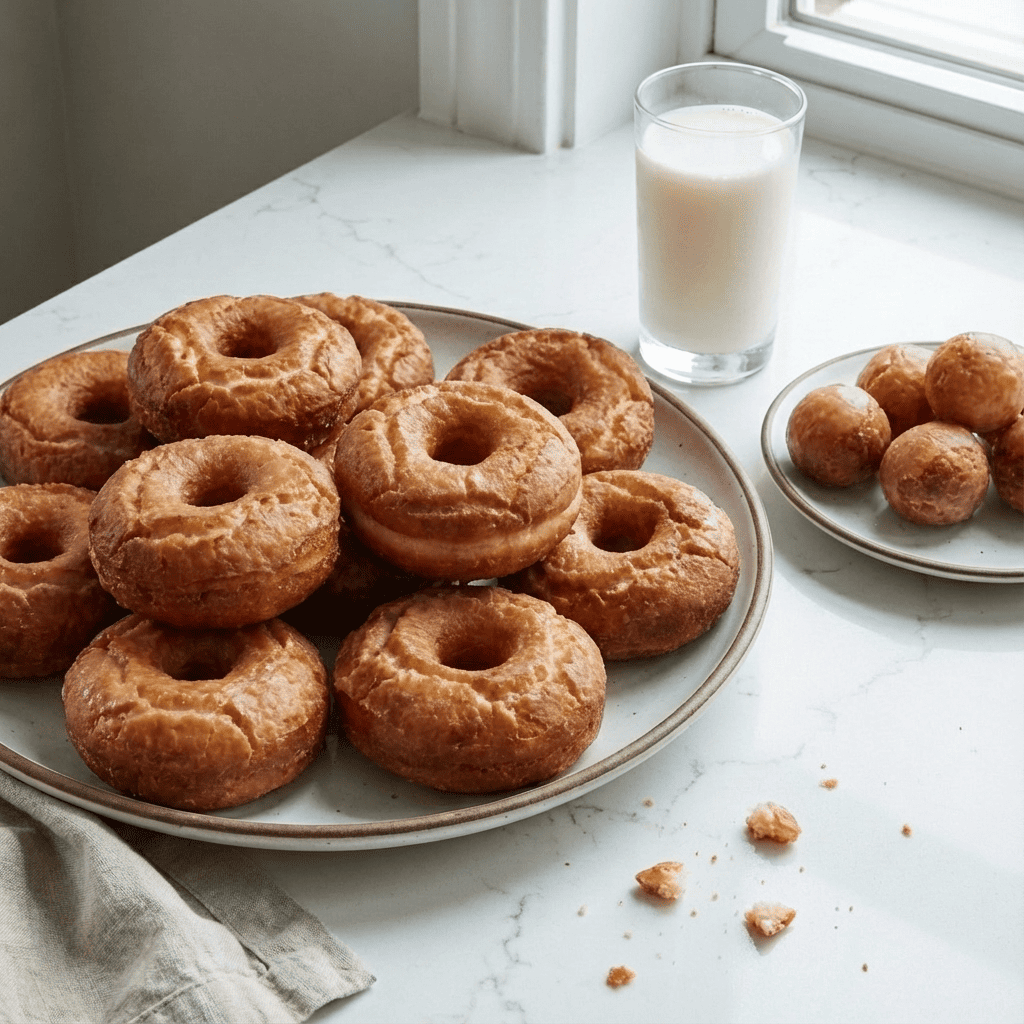
Step into your favorite old-school bakery without leaving your kitchen. These Sour Cream Donuts are the epitome of the classic cake donut: dense yet tender, with a slightly crisp exterior and a soft, springy crumb that melts in your mouth.
The secret ingredient, sour cream, adds a subtle tang and incredible richness that keeps them moist for days. Fried until golden brown and dipped in a crackly vanilla glaze, they are a nostalgic treat that’s surprisingly simple to make. One bite of these warm, homemade donuts, and you’ll understand why they’re a timeless favorite.
The Science of the Tender, Moist Crumb
The exceptional texture of these donuts is a masterclass in fat and acid chemistry. Sour cream is the star, performing multiple roles. Its high fat content enriches the dough, while its acidity tenderizes the gluten in the flour, preventing a tough, chewy texture and ensuring a fine, delicate crumb. The acid also reacts with the baking soda, creating carbon dioxide bubbles for lift.
Using cake flour (or a homemade substitute with cornstarch) is another key. Cake flour has a lower protein content than all-purpose flour, which means less gluten forms, resulting in a more tender, cake-like bite. The donuts are fried at a precise temperature (365°F/185°C). This is hot enough to quickly set the exterior, creating a thin, crisp shell that seals in moisture, but not so hot that the outside burns before the inside cooks through. The quick fry ensures the interior steams, becoming light and cooked through without absorbing excess oil.
Instructions
Make the Dough
In a medium bowl, whisk together cake flour, baking powder, baking soda, salt, and nutmeg. In a large bowl, whisk sugar and eggs until thick and pale, about 1 minute. Whisk in sour cream, milk, melted butter, and vanilla until smooth. Gently fold the dry ingredients into the wet until just combined—do not overmix. The dough will be soft and sticky. Cover and chill for 30-60 minutes to firm up.
Roll & Cut
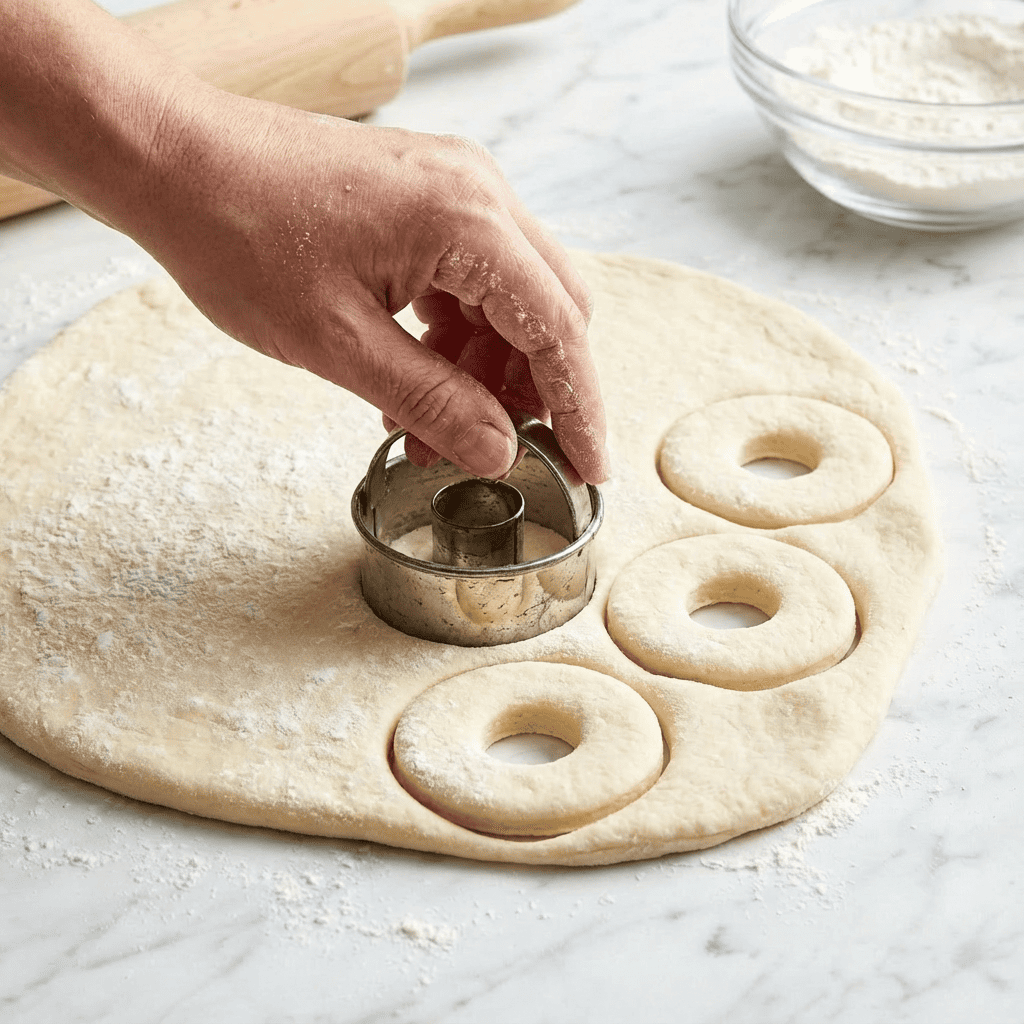
On a generously floured surface, pat the chilled dough to ½-inch thickness. Use a floured 3-inch donut cutter (or two round cutters) to cut out donuts, dipping the cutter in flour between cuts. Re-roll scraps once.
Heat the Oil
In a heavy pot or Dutch oven, heat 2-3 inches of oil to 365°F (185°C). Use a thermometer for accuracy.
Fry the Donuts
Carefully slide 2-3 donuts into the hot oil. Fry for 60-90 seconds per side until deep golden brown. Fry the holes separately for 45-60 seconds total. Drain on a wire rack set over a baking sheet.
Make the Glaze
While donuts cool slightly, whisk all glaze ingredients in a shallow bowl until smooth. It should be thick but pourable.
Glaze the Donuts
Once donuts are cool enough to handle but still warm (about 5 minutes out of the fryer), dip the top of each donut into the glaze. Lift, let excess drip off, and return to the wire rack. The glaze will set as it cools.
Serve
Enjoy slightly warm or at room temperature. They are best the day they are made.
Storage
Store leftover donuts in a single layer in an airtight container at room temperature for 1-2 days.
Pro-Tips for Donut Success
- Chill the Dough: This is essential for handling. Cold dough is less sticky and will hold its shape better when cut and fried.
- Use a Thermometer: Maintaining the correct oil temperature is the single most important factor for donuts that aren’t greasy. Adjust heat as needed.
- Don’t Overmix: Mix the dough just until the flour disappears. Overmixing develops gluten, leading to tough donuts.
- Fry in Batches: Frying too many at once will cause the oil temperature to plummet, resulting in oily donuts.
- The Nutmeg: Don’t skip it! It’s the signature flavor of an old-fashioned cake donut.
- Glaze While Warm: Glazing while the donuts are warm helps the glaze stick and creates that classic, slightly crackly shell.
- Room Temperature Dairy: Using cold sour cream or milk can cause the melted butter to solidify and create lumps in the batter.
- Troubleshooting: If your oil is at the right temperature but the donuts are browning too fast, your baking soda may be too fresh/active. Reduce it to ½ tsp next time.
These Old-Fashioned Sour Cream Donuts are a rewarding project that delivers a taste of pure, homemade nostalgia.