If you’ve never experienced Philly-Style Tomato Pie, prepare to discover a new obsession. Neither pizza nor pie in the traditional sense, this Italian bakery classic features a thick, airy, focaccia-like crust topped generously with a rich, slow-simmered tomato sauce.
Unlike pizza, it’s traditionally served at room temperature with just a dusting of Pecorino Romano cheese. It’s a Philadelphia institution, found in old-school Italian bakeries and on every Eagles game day table.
The Science of the Perfect Philly Tomato Pie Crust
A true Philly tomato pie is defined by its thick, chewy-yet-tender crust—more focaccia than pizza . The secret lies in a high-hydration dough and long, slow fermentation. Using bread flour (with its high protein content) creates the strong gluten network necessary for that signature chewy structure.
The high water content (typically 65-70% hydration) yields a moist, open crumb. A 24-hour cold ferment (or at least a long room-temperature rise) allows enzymes to break down complex carbohydrates, developing deep, complex flavor and that airy interior. The generous amount of olive oil in the pan and on top of the dough ensures a crispy, golden bottom and adds richness throughout.
The sauce itself is a study in simplicity and concentration. Unlike pizza sauce, Philly tomato pie sauce is slow-simmered to concentrate flavors and thicken it, preventing a soggy crust. A touch of sugar balances the acidity of the tomatoes, while garlic and oregano provide the classic Italian bakery aroma.
Instructions
Make the Dough
In the bowl of a stand mixer fitted with a dough hook, combine the warm water and yeast. Let sit for 5 minutes until foamy. Add the flour and mix on low until well combined. Cover and let rest for 25 minutes.
Add the sugar and salt, then mix on low. With the mixer running, slowly drizzle in 2 tablespoons of olive oil. Increase speed to medium-high and mix for 5-8 minutes until the dough is smooth and slightly tacky.
Cold Ferment (Optional but Recommended)
Transfer the dough to a large, oiled bowl. Cover tightly and refrigerate for 24 hours. This long, slow rise develops deep flavor. If possible, after 6-8 hours, fold the dough over itself once to redistribute.
Prepare the Sauce
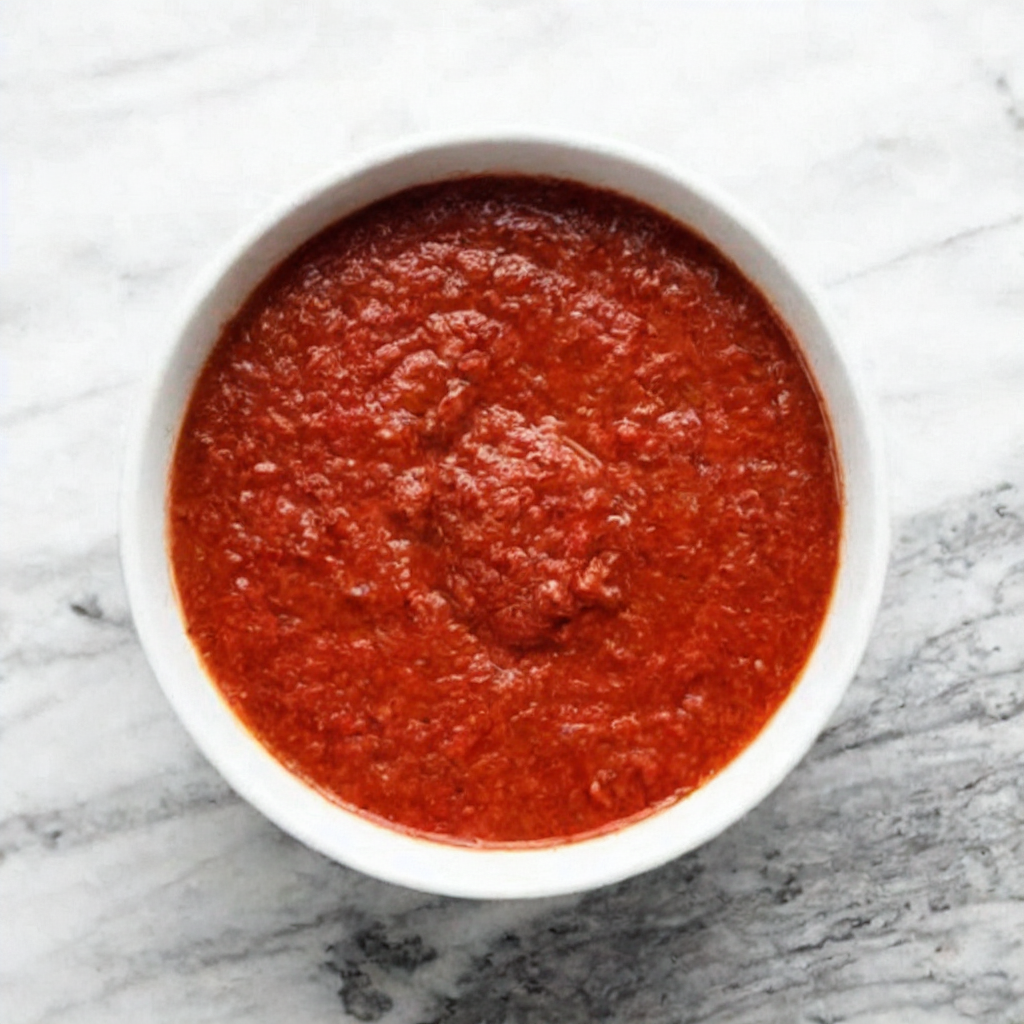
While the dough rises, make the sauce. In a medium saucepan, combine the crushed tomatoes, minced garlic, olive oil, oregano, sugar, salt, and red pepper flakes. Bring to a simmer over medium heat.
Reduce heat to low and simmer, uncovered, for 30-45 minutes, stirring occasionally, until the sauce has thickened. Remove from heat and let cool completely. (The sauce can be made ahead and refrigerated.)
Prepare the Pan & Second Rise
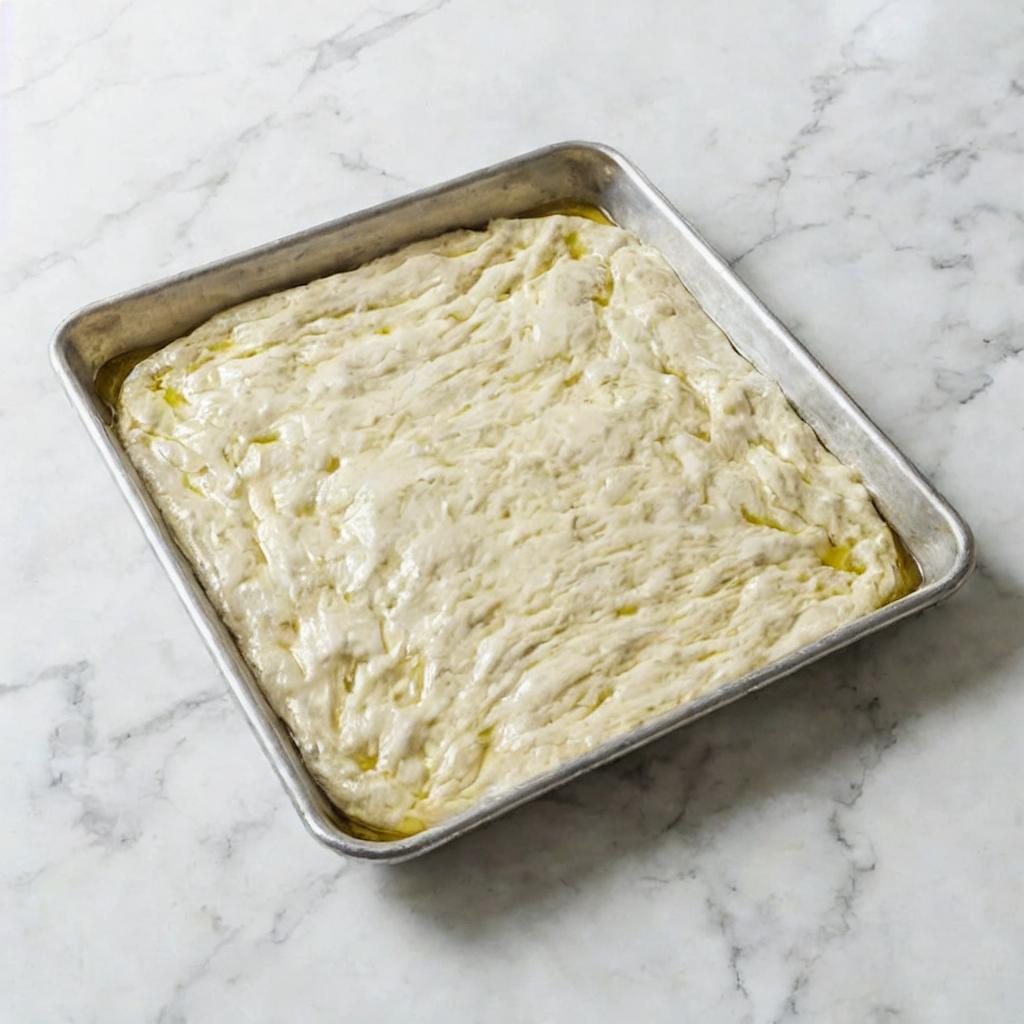
Pour ⅓ cup of olive oil into a 13×18-inch rimmed baking sheet, spreading it to coat the bottom. After the dough has fermented, gently turn it out onto the oiled pan. Drizzle the top with another 2 tablespoons of olive oil. Cover with plastic wrap and let rise at room temperature for 3-4 hours, until the dough has doubled or tripled in size and is very relaxed.
Shape & Dimple
Using your fingertips, gently press and stretch the dough to the edges of the pan, being careful not to tear it. If it resists, let it rest for 15 minutes and try again. Once it reaches the edges, dimple the entire surface with your fingertips.
First Bake (Blind Bake)
Preheat oven to 425°F (220°C). Place the pan in the oven and bake the crust alone for 7-10 minutes, until it just begins to set but is not yet browned.
Add Sauce & Finish Baking
Remove the pan from the oven. Spread a generous, even layer of the cooled sauce over the crust, leaving a ½-inch border around the edges. You will not use all the sauce—reserve about 1 cup. Return to the oven and bake for 15-20 more minutes, until the edges are deep golden brown and the bottom of the crust is crisp.
Cool & Serve
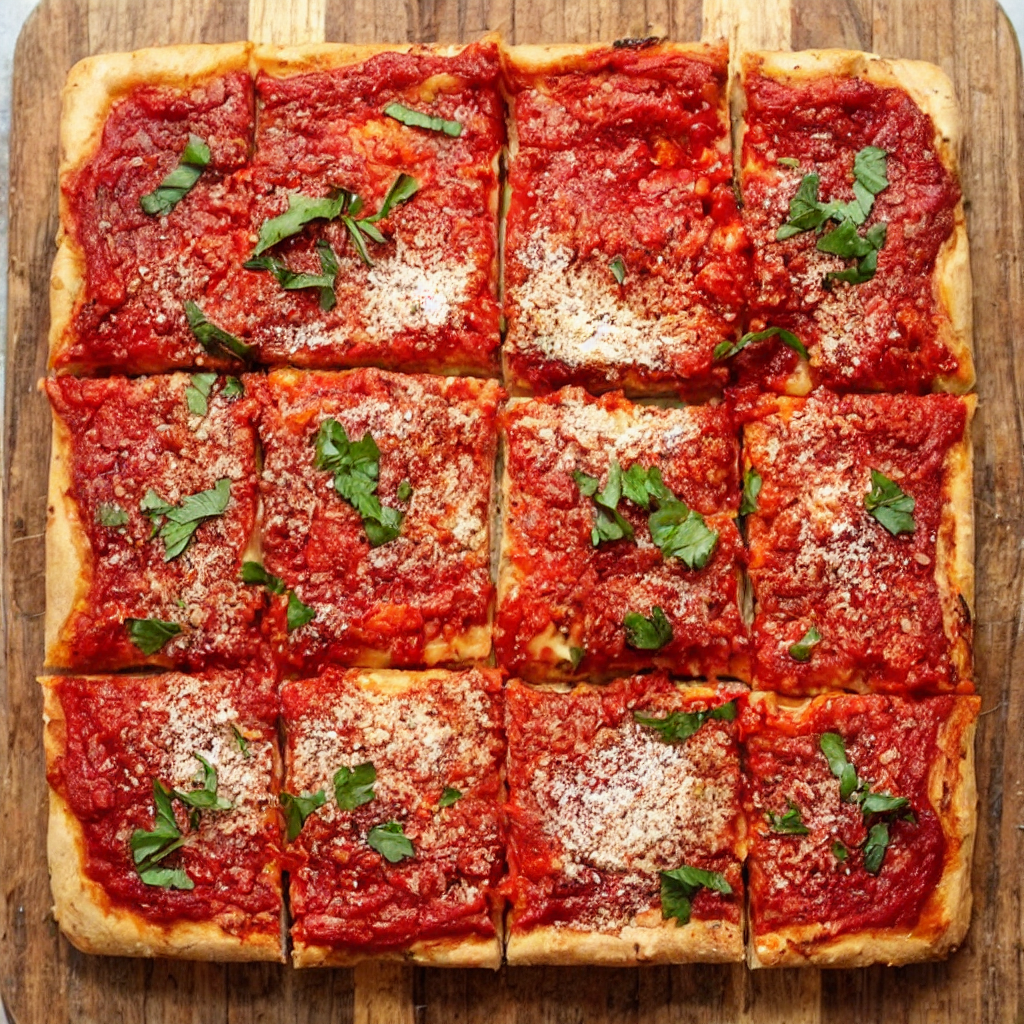
Remove from the oven and let cool completely in the pan on a wire rack. Once cool, drizzle with additional olive oil and sprinkle generously with grated Pecorino Romano and a pinch of dried oregano. Transfer to a cutting board, slice into squares, and serve at room temperature.
Pro-Tips for Authentic Philly Tomato Pie
- High Hydration Dough: Don’t be alarmed by the sticky dough. That high water content is what creates the airy, focaccia-like crumb. Wet your hands when handling it.
- Cold Ferment for Flavor: The 24-hour rest in the fridge is non-negotiable for that authentic, complex, slightly tangy flavor.
- Cool the Sauce Completely: Warm sauce will make the dough gummy and compromise the texture. Make it ahead and let it come to room temperature before spreading.
- Don’t Skimp on Oil: The olive oil in the pan and on top is essential for a crispy, flavorful crust. It also prevents sticking.
- Check the Bottom: Use a spatula to lift the pie and check the bottom before removing it from the oven—it should be deep golden brown and crisp.
- Serve at Room Temp: This isn’t pizza. It’s meant to be eaten at room temperature, which allows the crust and sauce flavors to meld perfectly.
- Storage: Leftovers (if any!) can be wrapped in foil and kept at room temperature for up to 2 days. Reheat slices in a 350°F oven for 5-7 minutes.
This Philly-Style Tomato Pie is a true taste of Italian bakery tradition.